



Ketamine Therapy in Houston, TX

WHEN TREATMENT HAS REACHED ITS LIMIT

When You've Done the Work and Something Still Hasn't Moved

You've tried the medication. Adjusted it. Added another. You've been in therapy, maybe for years. You've done the cognitive work, understood the patterns, maybe even talked through specific memories. And something is still there.


Not unchanged. The work has mattered. But there's a layer underneath it that the thinking mind alone doesn't seem to reach. A weight that lifts temporarily and returns. A nervous system that stays activated no matter how much you understand about why.


This is not a failure of effort. It is a description of what treatment resistance actually looks like, not the absence of trying, but the experience of reaching the ceiling of what standard approaches can offer.


For some people this looks like depression that medication has managed but not resolved. For others it's PTSD, OCD, an eating disorder, or an anxiety presentation that has become entrenched in ways that cognitive approaches haven't been able to fully reach.

Jennifer Lancaster sitting on a couch.

WHAT KETAMINE-ASSISTED THERAPY ACTUALLY IS

Ketamine-Assisted Therapy Is Not a Ketamine Clinic

Ketamine clinics often focus on the medicine alone. What we offer is different.


Ketamine-assisted psychotherapy (KAP) uses ketamine as one component within an ongoing therapeutic relationship, not as a standalone medical procedure. The medicine creates a window: the brain is more flexible, defenses soften, and material that has been difficult to access in standard therapy becomes more available. What happens in that window, and in the integration work that follows, is where the actual clinical work lives.


Ketamine works differently from standard antidepressants. Rather than targeting serotonin, it engages the glutamate system and supports the formation of new neural connections. For some clients, this produces a meaningful shift in mood, reactivity, and the felt sense of possibility, sometimes within hours of the first session.


Ketamine without integration is a temporary intervention. The preparation and therapeutic work that surrounds it are what allow that shift to last. This is the model at Houston Healing Collective: ketamine within a clinical relationship, not separate from it.


We offer ketamine therapy, ketamine-assisted EMDR, ketamine-assisted couples therapy, and ketamine retreats and intensives through intravenous (IV), intramuscular (IM), and sublingual routes of administration. Every treatment plan is built around your specific clinical picture.

A TEAM BUILT FOR THIS

How We Work With Ketamine at Houston Healing Collective

At Houston Healing Collective, we understand that for many people considering ketamine therapy, the questions are less about whether it works and more about what it actually involves. What it will feel like. Whether you'll be alone. Whether there's a real clinical structure around it, or whether you'll be handed something and left to make sense of it on your own.


Our team consists of certified ketamine therapists and certified psychedelic-assisted therapy providers. Every ketamine treatment at HHC includes a medical intake with a physician partner, preparation sessions before the medicine, and integration therapy after. You are never left alone during a medicine journey. A clinician is present throughout.


For clients considering ketamine-assisted EMDR, we offer intensive formats that combine ketamine's window of neuroplasticity with EMDR processing, specifically for trauma and eating disorder presentations where both systems need to be addressed together.

Houston Healing Team Photo
  • Clinicians offering ketamine-assisted therapy at HHC:

    Jennifer Lancaster, LCSW-S, PATP — Texas License #64393 


    Rachel Chang, LMSW — Supervised by Jennifer Lancaster, LCSW-S | Texas License #114376 


    Jamie Weiser, LMFT-A — Supervised by Lindsay McCarthy PhD, LMFT-S, LCDC | Texas License #206082 


    Beatrice Paksa, LMSW — Supervised by Jennifer Lancaster, LCSW-S | Texas License #114620 


    Jessica Shatkun, LPC-A — Supervised by Bridget McCauley, LPC-S | Texas License #101462 

  • Working together, you may find:

    A ketamine treatment model embedded in an ongoing therapeutic relationship, not a standalone procedure


    Full preparation before any medicine session: what to expect, how to orient, and how to work with what comes up


    Medical intake and oversight provided by a physician partner trained in ketamine treatment


    Integration sessions that help you make sense of and build on what the medicine surfaces


    The full backing of a collaborative team of certified ketamine therapists and psychedelic-assisted therapy providers

Curious About Whether Ketamine Therapy Is the Right Next Step?

The consultation is free. We'll talk through your history, what you've already tried, and whether ketamine-assisted therapy is a clinical fit for what you're experiencing.

WHAT CLIENTS OFTEN NOTICE

What's Possible Through Ketamine Therapy in Houston

Ketamine isn't a magic pill. But for clients where it's the right clinical fit, delivered within a full therapeutic relationship, something often begins to shift. Not through reasoning their way there, but through changes beneath the surface that the thinking mind alone couldn't reach.

Small black starburst icon in the top-left corner on a blank white background

Less Weight

Some clients describe their symptoms feeling lighter after early sessions. It's not resolution, but it's a different quality of experience than what was there before.

Small black starburst icon in the upper-left corner on a white background

Greater Access

Material that has been difficult to reach in standard therapy may become more available. Not forced, more accessible, with a clinician present to help navigate it.

Small black starburst in the upper-left corner on a plain white background

A Different Starting Point

The rigidity that has kept old patterns in place may begin to soften. Clients often describe feeling more open to the work, to themselves, to what might be possible.

PREPARATION, MEDICINE, AND INTEGRATION

What Ketamine-Assisted Psychotherapy Looks Like From Start to Finish

Our approach is collaborative and layered, built around your specific clinical needs from first session to last.

  • Medical Intake and Assessment

    Medical Intake and Assessment

    Before any medicine session, you'll complete a medical intake with a physician partner trained in ketamine treatment. Your health history, current medications, and clinical picture are reviewed to confirm ketamine is medically appropriate and to establish the right format and dosage for you.

  • Preparation Sessions

    Before the medicine, we work together to prepare. This includes psychoeducation about ketamine and what the experience may feel like, intention-setting, and any clinical preparation specific to your presentation.

  • The Medicine Session

    Ketamine is administered in a safe, clinician-present environment. You are never alone. The format,  IM, IV, or sublingual, is determined by your clinical picture and preference. Sessions typically last 2 hours depending on the format, and a clinician remains present throughout.

  • Integration

    The medicine session is the beginning of the work, not the end of it. Integration therapy follows each session, helping you make sense of what emerged, connect it to your broader therapeutic work, and begin to build on what's starting to shift.

  • Ketamine + EMDR Intensives

    For clients with trauma or eating disorder presentations, we offer two formats: psychedelic-dose ketamine sessions followed by EMDR integration, and ketamine-assisted EMDR, which uses low-dose sublingual ketamine during EMDR reprocessing to support deeper access. We'll help you determine which approach fits your clinical picture.


The pace is yours to set. Nothing moves without your understanding and agreement at every stage.

Assorted craft supplies on a round table, including cups, markers, books, and black items.
Jennifer Lancaster sitting on a couch.

WHAT BECOMES POSSIBLE

When the Weight of It All Begins to Lift

There may come a point when something that has felt immovable starts to shift. It may not disappear. But it no longer runs your life.

For clients with treatment-resistant depression, this may look like engaging in daily life without the same threshold of effort or hopelessness. Noticing something that feels like ease, even briefly.


For trauma clients, it may look like being able to think about the past without the same level of nervous system activation. The memory isn't forgotten. But it no longer has hold of your present.

For clients with OCD or an eating disorder, it may look like the patterns most resistant to cognitive approaches beginning to soften, the rigidity that kept them in place becoming more accessible to the therapeutic work.


Research on ketamine for PTSD shows meaningful reductions in symptom severity, in some cases as early as one day after treatment. Studies on treatment-resistant depression show that roughly two-thirds of patients who had not responded to prior antidepressants experienced at least a 50% reduction in symptoms.


For eating disorders, early research and clinical case series suggest ketamine may be particularly useful for presentations that have not responded to standard approaches. These are not guarantees. They are part of an honest clinical conversation about what the research suggests and what we have seen.

WHERE TO START WHEN YOU'RE NOT SURE YET

How to Begin Ketamine Therapy in Houston

Most people who reach out about ketamine therapy are not fully certain they want to do it. That's not a reason to wait. The consultation is specifically for people who are in the middle of deciding, curious, maybe hopeful, probably carrying questions they haven't been able to answer from a website.

1

Step 1: Reach Out

Fill out our contact form or call us. You don't need to know whether ketamine is right for you yet. That's what the consultation is for.

2

Step 2: Talk With Us

We'll schedule a consultation at no cost. A real conversation about where you are, what you've tried, and whether ketamine-assisted therapy is the right clinical fit. We'll be honest with you about what we think.

3

Step 3: Medical Intake and Treatment Planning

If it feels right, we'll coordinate a medical intake with our physician partner and begin building your individualized treatment plan. Nothing moves to the medicine stage until you're fully prepared and fully agreed.

WHAT THE WORK REVEALS

What Clients Often Discover About Ketamine-Assisted Therapy

As the work unfolds, many clients come to understand the process differently than they expected going in.


  • That it was not what they feared. The medicine session was supported by a trained clinician, and they were not alone with whatever came up.

  • That the preparation mattered more than they anticipated. Having a clear intention and clinical framework going in changed the quality of what the medicine surfaced.

  • That the ambivalence they arrived with was not a problem. Many clients who were most uncertain at the start describe the most meaningful shifts.

  • That integration was where the real shift happened. The medicine opened a door; the therapy work afterward allowed them to walk through it.

  • That the experience of something lifting, even partially at first, gave them access to the therapeutic work in a way that hadn't been available before.

  • That their presenting symptoms were not the ceiling of what was possible. There was more available than prior treatment had been able to reach.
Woman relaxing in a chair by a window, stretching with hands behind her head, beside a small table and lamp

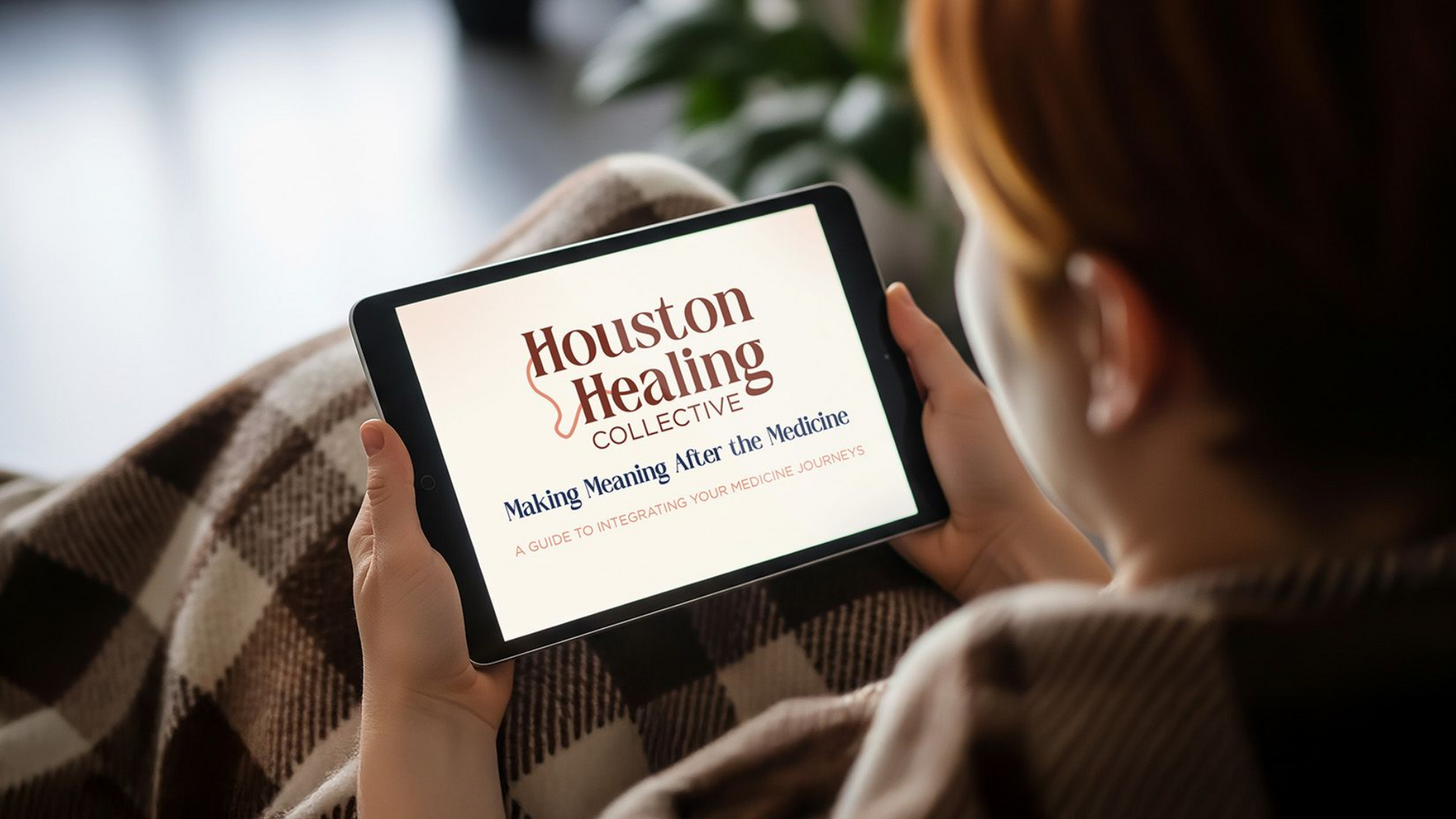
Making Meaning After the Medicine

A free guide to ketamine integration. What emerged in your session matters. This guide is for the days and weeks that follow, when the window is still open and the work is most available.

Guide mockup for Trauma.

QUESTIONS WE HEAR OFTEN

Frequently Asked Questions About Ketamine Therapy

  • Is ketamine therapy safe?

    Ketamine has been used in clinical settings since the 1970s and has an established safety profile. Every client at HHC undergoes a medical intake with a physician partner trained in ketamine treatment before any medicine session. Your health history, current medications, and clinical picture are reviewed to confirm ketamine is medically appropriate for you. A clinician is present throughout every session. Ketamine is not appropriate for everyone, and we will tell you clearly if your medical or clinical picture suggests otherwise.

  • What does the ketamine experience actually feel like?

    Ketamine produces a dissociative state, a sense of distance from ordinary thought and sensation that varies in intensity depending on the dose and format. Many clients describe it as a feeling of expanded perspective, reduced self-criticism, or access to material that is usually harder to reach. It is not a fully unconscious experience, though the depth of awareness varies. Some clients communicate during the session; others are more inward. The experience varies between individuals and between sessions. We prepare you specifically for what to expect before any medicine session.

  • How is this different from a ketamine infusion clinic?

    IV ketamine clinics offer ketamine as a medical intervention, typically a series of infusions without structured psychotherapy before or after. The research suggests that ketamine without integration produces shorter-lasting results. At HHC, ketamine is one component within an ongoing therapeutic relationship. Preparation and integration are built into every treatment plan. You will not receive ketamine here without clinical support surrounding it.

  • Does insurance cover ketamine therapy?

    Ketamine-assisted psychotherapy is not currently covered by most insurance plans. We are a private-pay practice. The therapy components of your treatment may be eligible for out-of-network reimbursement depending on your plan, we can provide documentation to support that process. We recommend contacting your insurance provider to ask about out-of-network mental health benefits.

  • I'm already in therapy elsewhere. Can I still do ketamine treatment at HHC?

    Yes. We regularly coordinate with outside providers. If you are working with a therapist, psychiatrist, or other clinician, we will collaborate with them as part of your treatment plan, with your permission. For some clients, ketamine sessions at HHC are a complement to ongoing work elsewhere rather than a replacement for it.

ONE CONVERSATION IS ENOUGH TO START

What You've Tried Isn't Everything That Exists

If you've reached the point where you're wondering whether there's something beyond what you've already tried, that question deserves a real answer, not a website.


The consultation is free. A real conversation, not a commitment. We'll tell you honestly whether we think ketamine-assisted therapy is the right fit for where you are.