




Binge Eating Therapy in Houston: What It Is, What to Expect, and How to Find the Right Fit

Jennifer Lancaster • September 6, 2026

Share This Article:

If you've been searching for binge eating disorder therapy in Houston, you're already doing something important: you're taking your relationship with food seriously enough to look for real help.


Binge eating disorder is the most common eating disorder in the United States — and one of the most undertreated. It's frequently dismissed, misdiagnosed, or addressed only at the surface level. The good news is that it responds well to the right treatment.


This post will walk you through what binge eating therapy actually involves, what to look for in a therapist, and what you can expect from the process.

What Is Binge Eating Disorder — Really?

Binge-eating disorder is characterized by recurrent episodes of eating large amounts of food in a short period of time, accompanied by a feeling of loss of control. Unlike bulimia, there's no compensatory behavior like purging or excessive exercise afterward. What follows instead is usually a wave of shame, guilt, and distress, and often a resolve to restrict that quietly sets the next binge in motion.


Binge eating disorder is not a willpower problem. Research suggests a neurobiological basis, showing that the brain's reward and impulse control systems work differently in people with binge eating disorder. (Leehr et al., 2016) The binge isn't a character flaw. It's a signal that something deeper needs attention.


It's also worth noting that binge eating disorder affects people of all body sizes. Someone doesn't need to be in a larger body to have binge eating disorder, and someone in a larger body isn't automatically binge eating. These assumptions cause real harm, and they're one of the reasons binge eating disorder goes undiagnosed for so long.

What Our Binge Eating Therapy in Houston Actually Addresses

Surface-level treatment focuses on stopping the binge. That's not enough.


Effective eating disorder therapy works on several layers at once:


The behavior — understanding the patterns, triggers, and cycles that maintain binge eating, and building concrete skills to interrupt them. We offer a variety of skills-based therapies, including cognitive behavioral therapy (CBT), dialectical behavior therapy (DBT), and approaches that teach you to regulate your nervous system.


The emotional drivers — binge eating is almost always connected to something underneath. Stress, shame, loneliness, anxiety, numbness, or the need to self-soothe. Therapy that doesn't address the emotional layer leaves the root system intact.


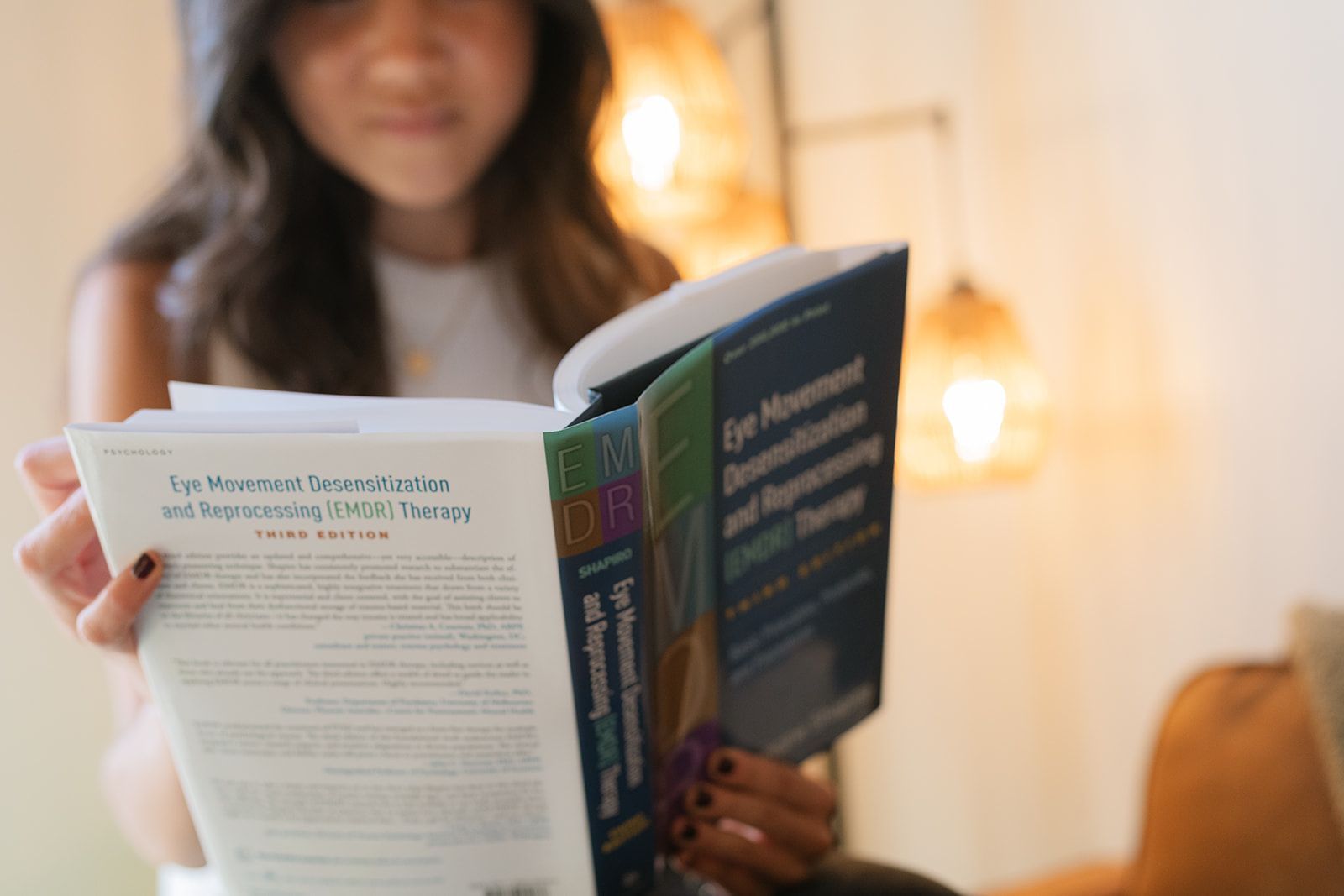
The trauma layer — a significant number of people with binge eating disorder have a trauma history. Sometimes the binge is the body's way of managing what it never had a chance to process. If trauma is a part of your story, you need an evidence-based approach to treat the trauma. Learn more about how we help people work through trauma and eating disorders with EMDR therapy in Houston.


The relationship with food and your body — restriction fuels bingeing more than most people realize. Healing the rigid food rules, the guilt around eating, and the complicated feelings about your body is part of the work, not a side note. Most importantly, binge eating disorder therapy needs to help you repair the relationship with your body through an approach that works directly with the body. You can learn more about our use of trauma-informed yoga therapy for eating disorder recovery through our website.


The inner critic — the shame that follows a binge is often as damaging as the binge itself. Learning to relate to yourself differently is central to recovery. We use IFS-informed therapy to help people through this process.

What to Look for in a Binge Eating Therapist in Houston

Not every therapist who lists eating disorders on their website has specialized training in binge eating disorder. Here's what actually matters:


Eating disorder specialization. Binge eating disorder is not the same as general emotional eating or stress eating. You want someone with specific training in eating disorder treatment.


Trauma specialization. Given how often binge eating disorder and trauma intersect, a therapist who only works at the behavioral level will hit a ceiling quickly. Ask whether they work with the nervous system, the body, and the underlying emotional material, not just the eating disorder thoughts and behaviors.


HAES-aligned framework. A therapist who ties recovery to weight loss is working against you. Sustainable recovery comes from changing your relationship with food and your body, not from achieving a particular size. Look for someone who explicitly works from a Health at Every Size or weight-neutral perspective.


Modalities that go deeper than talk therapy. CBT and DBT have strong evidence bases for binge eating disorder and are helpful tools. We use them too. But for many people, especially those with trauma histories, approaches that work with the body, the nervous system, and the parts of the Self that drive the binge cycle can help people find greater progress...and most importantly, maintain it. Working with thoughts and behaviors alone is often not enough.


A real relationship. Therapy works when you feel safe, understood, and not judged. That matters as much as credentials. Trust your gut in the consultation.

How We Approach Binge Eating Therapy at Houston Healing Collective

At Houston Healing Collective, we specialize in the intersection of trauma and eating disorders. We work from a Health at Every Size framework, which means that your weight alone doesn't determine your health, your diagnosis, your treatment, or your success. We understand nuance, and we work with a team of eating disorder specialists to tailor therapy to your unique challenges and needs.


Our clinicians are trained in evidence-based approaches, including CBT and DBT, alongside integrative, evidence-informed modalities that go deeper than talk therapy alone: EMDR, IFS-informed therapy, ketamine-assisted psychotherapy, and trauma-informed yoga.

How to Start Binge Eating Therapy in Houston

Your first step is a free 15-minute consultation call. We make it convenient to instantly schedule your free eating disorder therapy consultation here on our calendar. During the call, we'll talk through what you've been experiencing, what you've tried before, and whether our approach is the right fit. If it is, your first sessions will focus on understanding the full picture: your history, your patterns, and what lies beneath the binge cycle. We will also help you build an eating disorder recovery team, and we actively collaborate with that team to provide the quality, comprehensive eating disorder treatment that we've seen work for so many of our clients.


From there, treatment moves at your pace. Some clients need to start with practical tools to interrupt the binge cycle. Others have built a foundation, but come to us to dig deeper on their recovery journey. We help them discover and reprocess the past experiences that may be driving their challenges with food, exercise, and their body.


Recovery isn't about perfect eating. It's about building a healthier relationship with food, your body, and yourself. That takes time, and we know it's genuinely possible.

Frequently Asked Questions About Binge Eating Disorder Therapy in Houston

  • Does binge eating therapy work if I'm also on Ozempic or a GLP-1 medication?

    It depends — and that's exactly the kind of question worth exploring with a specialist. GLP-1 medications are not FDA-approved for binge eating disorder, and the research on their use for BED is still early and limited. For some people, medication may reduce binge frequency and create space for the deeper work therapy addresses. For others — particularly those whose binge eating is driven by restriction — appetite suppression can complicate things. We also understand that some people are prescribed a GLP-1 for legitimate medical reasons, such as type 2 diabetes, cardiovascular risk reduction, or PCOS. At Houston Healing Collective we work with people at all different points, including those currently on GLP-1 medications. We'll collaborate with your prescribing provider, explore what's right for your specific situation, and never take a one-size-fits-all approach.

  • How long does binge eating therapy take to work?

    There's no fixed timeline. Some people notice a reduction in binge frequency within the first few months as new skills take hold. The deeper work, healing the relationship with food, the body, and the inner critic, tends to take longer. We'll check in regularly on progress and adjust the approach as needed.

  • Is binge eating disorder the same as being overweight?

    No. Binge eating disorder is a diagnosable mental health condition defined by the eating pattern and the loss of control, not by body size. People in bodies of any size can have binge eating disorder, and having a larger body doesn't mean someone has it.

  • Do I need a referral to start binge eating therapy at Houston Healing Collective?

    No referral is needed. You can reach out directly to schedule a free consultation call.

Houston Healing Logo

Healing Beneath the Surface

If you're in Houston or anywhere in Texas, and something in this article felt familiar, you don't have to keep figuring it out alone. Reach out today and book a free 15 minute consultation.


Recent Posts

By Jennifer Lancaster June 10, 2026
We're not here to tell you whether you should be on Ozempic and any GLP-1 medication. That conversation belongs between you and your doctor. And honestly? We know it's never that simple. The pressure to look a certain way is real. The medical system has complicated relationships with bodies that don't fit a narrow mold. And for a lot of people, starting a GLP-1 medication wasn't a casual decision. It came after years of navigating health concerns, provider recommendations, and a culture that never lets you forget what your body looks like. We see all of that. This post is for anyone who is currently taking a GLP-1 receptor agonist like semaglutide (sold as Ozempic or Wegovy), or who is in conversation with a provider about whether one might be appropriate. Either way, you deserve an honest, clinically grounded picture of what these medications actually do. The benefits, the nuance, and the risks that don't always make it into the conversation. 
By Jennifer Lancaster June 7, 2026
Trauma is often at the root of eating disorders. Learn how EMDR targets the memories, beliefs, and nervous system patterns that keep people stuck.

A ketamine therapist during a ketamine-assisted therapy session for eating disorder treatment in Houston.
By Jennifer Lancaster June 2, 2026
Eating disorders are neurologically entrenched. Learn how ketamine-assisted therapy opens new pathways for recovery — and how we approach it at HHC.

Person holding EMDR bilateral stimulation buzzers during a ketamine-assisted EMDR therapy session
By Jennifer Lancaster May 3, 2026
KA-EMDR combines low-dose ketamine with EMDR to reach trauma that standard therapy can't. Houston Healing Collective explains how it works and who it's for

Three people sitting and talking on a patio with wicker chairs and a small table of flowers
By Jennifer Lancaster April 30, 2026
Learn how trauma-informed family therapy supports eating disorder healing in Houston, TX. Expert, compassionate guidance for families. Book a free consult.

Two people talking on a couch in a bright living room, one seated with knees hugged to chest
By Jennifer Lancaster April 30, 2026
Discover the trauma link behind eating disorders. Houston Healing Collective explores how unresolved trauma drives disordered eating. Book a free consult.

I'm Jennifer Lancaster

Most of the people I work with look fine from the outside. High-achieving, capable, holding everything together. Underneath that, there's usually longstanding complex trauma, a lot of self-criticism, and a deep exhaustion from never quite getting to the root of it.


I've spent 15 years training specifically in the areas that are considered really difficult to treat. I'm not a cookie-cutter therapist, and I work best with people who aren't looking for quick fixes. If this feels like you, feel free to book a free 15-minute consultation.

Recent Posts:

By Jennifer Lancaster June 10, 2026
We're not here to tell you whether you should be on Ozempic and any GLP-1 medication. That conversation belongs between you and your doctor. And honestly? We know it's never that simple. The pressure to look a certain way is real. The medical system has complicated relationships with bodies that don't fit a narrow mold. And for a lot of people, starting a GLP-1 medication wasn't a casual decision. It came after years of navigating health concerns, provider recommendations, and a culture that never lets you forget what your body looks like. We see all of that. This post is for anyone who is currently taking a GLP-1 receptor agonist like semaglutide (sold as Ozempic or Wegovy), or who is in conversation with a provider about whether one might be appropriate. Either way, you deserve an honest, clinically grounded picture of what these medications actually do. The benefits, the nuance, and the risks that don't always make it into the conversation. 
By Jennifer Lancaster June 7, 2026
Trauma is often at the root of eating disorders. Learn how EMDR targets the memories, beliefs, and nervous system patterns that keep people stuck.
A ketamine therapist during a ketamine-assisted therapy session for eating disorder treatment in Houston.
By Jennifer Lancaster June 2, 2026
Eating disorders are neurologically entrenched. Learn how ketamine-assisted therapy opens new pathways for recovery — and how we approach it at HHC.
Person holding EMDR bilateral stimulation buzzers during a ketamine-assisted EMDR therapy session
By Jennifer Lancaster May 3, 2026
KA-EMDR combines low-dose ketamine with EMDR to reach trauma that standard therapy can't. Houston Healing Collective explains how it works and who it's for
Three people sitting and talking on a patio with wicker chairs and a small table of flowers
By Jennifer Lancaster April 30, 2026
Learn how trauma-informed family therapy supports eating disorder healing in Houston, TX. Expert, compassionate guidance for families. Book a free consult.
Two people talking on a couch in a bright living room, one seated with knees hugged to chest
By Jennifer Lancaster April 30, 2026
Discover the trauma link behind eating disorders. Houston Healing Collective explores how unresolved trauma drives disordered eating. Book a free consult.
Two people talking in a bright counseling office, one holding a notebook.
By Jennifer Lancaster April 28, 2026
Explore body image therapy in Houston, TX — trauma-informed care to help you heal your relationship with food, body, and yourself. Book a free consult.

Jennifer Lancaster practicing somatic breathwork in trauma-informed yoga for eating disorders
By Jennifer Lancaster April 26, 2026
Trauma-informed yoga for eating disorders rebuilds body connection through breathwork, somatic cues & nervous system regulation. Book a free consultation.
Stack of eating disorder recovery books on a marble countertop at a Houston eating disorder therapy
By Jennifer Lancaster April 26, 2026
Trauma is the missing piece in eating disorder recovery. Houston Healing uses EMDR, IFS & somatic therapy to go deeper. Book a free consultation.
Couple in a therapy session discussing desire discrepancy and sexual intimacy in Houston
By Jennifer Lancaster April 25, 2026
Different sex drives affect most couples. Learn what causes desire discrepancy, why emotional safety matters, and how couples therapy in Houston helps.