

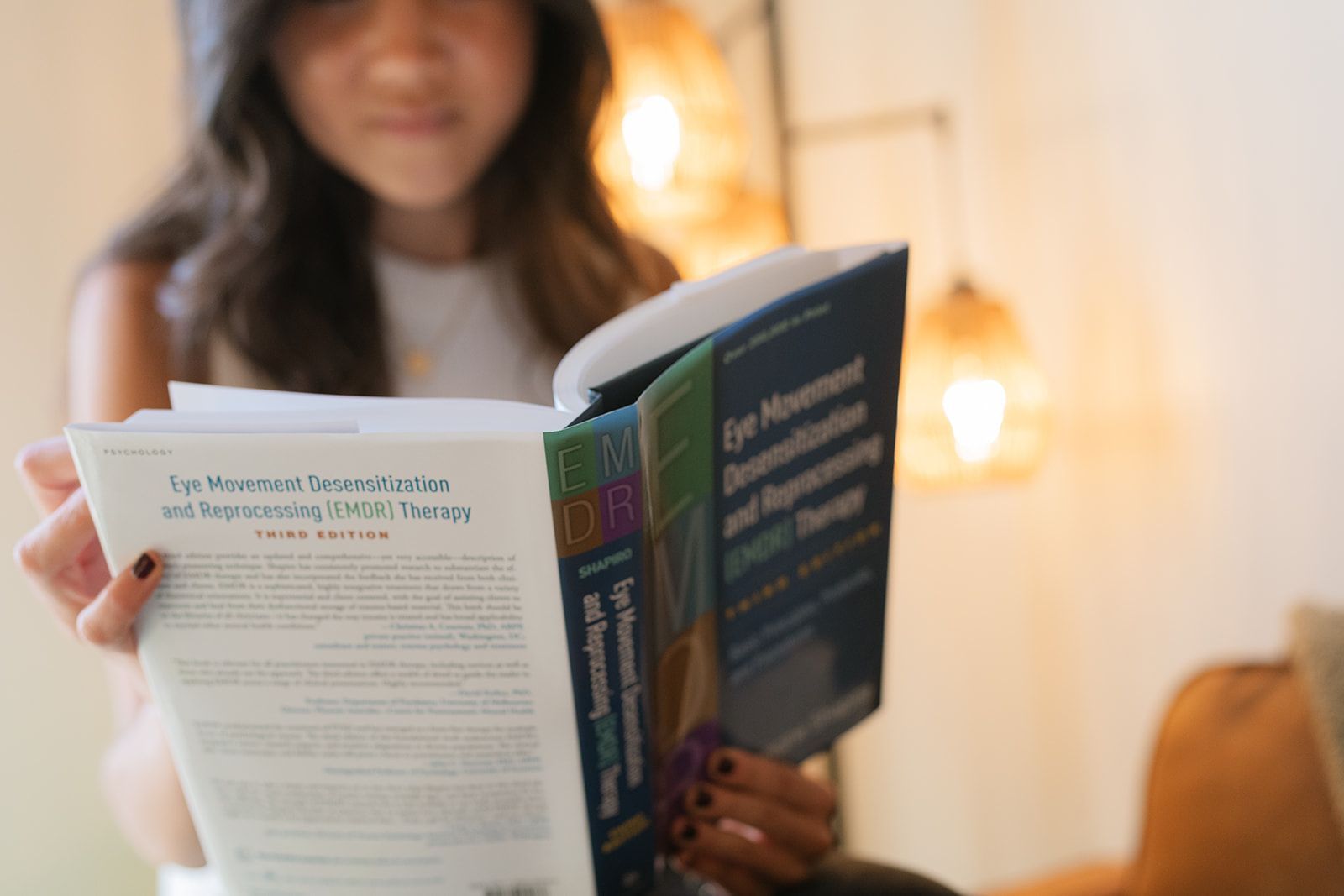
Ketamine-Assisted EMDR Therapy in Houston

Jennifer Lancaster • May 3, 2026

Share This Article:

For people with complex trauma, the nervous system’s protective responses can make deep reprocessing difficult — even with an evidence-based approach like EMDR. Avoidance, dissociation, or emotional flooding can interrupt the process before it has a chance to work.

Ketamine-assisted EMDR therapy — also called KA-EMDR — was developed specifically for this challenge. It combines the structured reprocessing of EMDR with a low dose of ketamine that creates greater neurological flexibility during the session itself. The result is often access to material that has been out of reach, with less fear and more emotional availability.

Houston Healing Collective is proudly one of the first practices to offer ketamine-assisted EMDR therapy in Houston. We are trained in the KA-EMDR protocol. This post explains what it is, how it works, and whether it might be right for you.

What Is EMDR?

 EMDR (Eye Movement Desensitization and Reprocessing) therapy is a structured, evidence-based therapy developed specifically to treat trauma. When something overwhelming happens, the brain can fail to process the experience fully — storing it instead as a fragmented memory that retains the emotional intensity, physical sensations, and distorted beliefs from the original event. These stuck memories don’t fade the way ordinary memories do. They get activated by triggers, driving responses that feel out of proportion to the present moment because, neurologically, part of the brain is still back in the original experience.


Bilateral stimulation — through eye movements, tapping, or sound — sends the brain into a similar processing state as REM sleep. This allows people to finally fully process material that was previously stored with maladaptive information and beliefs, and integrate more adaptive, accurate beliefs in their place. The memory doesn’t disappear; it loses its charge and gets filed as the past rather than experienced as the present.


EMDR follows eight structured phases, moving from thorough history-taking and preparation through active reprocessing and into consolidation. The preparation phases matter — clients build internal resources and stability before any reprocessing begins, so the work is grounded and contained.

What Is Ketamine-Assisted Therapy

Ketamine-assisted therapy pairs a carefully prescribed, low dose of ketamine with psychotherapy to enhance what’s possible in a session. Ketamine promotes neuroplasticity — the brain’s ability to form new connections — and temporarily widens the window of tolerance, making emotionally difficult material more accessible. You can read more about our approach to ketamine therapy in Houston.

What Is Ketamine-Assisted EMDR Therapy and How Does It Work?

Ketamine-assisted EMDR (KA-EMDR) is a structured clinical protocol developed by Danielle Ciccone and Michele Topel, designed specifically to integrate low-dose sublingual ketamine into the EMDR reprocessing phases. It is distinct from standard ketamine-assisted psychotherapy in both dosing and method — and it is distinct from standard EMDR in the way the session is sequenced.

The ketamine used in KA-EMDR is psycholytic, meaning the dose is low enough to keep clients alert, grounded, and fully engaged in therapy. This is not a high-dose or dissociative experience. Clients remain present and able to participate actively throughout

Ketamine-Assisted EMDR Therapy Structure

The KA-EMDR protocol follows a precise order that draws on neuroscience research on memory reconsolidation — the window in which a memory, once reactivated, becomes temporarily malleable and open to updating.

Here is how a reprocessing session unfolds:

1. Memory activation (EMDR Phase 3 — before ketamine)  The session begins with the therapist guiding the client through target memory activation using the standard EMDR protocol. This step happens  before  ketamine is administered. The goal is to fully activate the neural network associated with the traumatic memory while the brain is in its normal state — so the memory is live and accessible when the ketamine takes effect.

 2. Ketamine self-administration  Once the memory has been activated, the client self-administers a low-dose sublingual ketamine troche — a small lozenge held under the tongue and swished as it dissolves. The client is always in control of this step. A physician oversees the medical component of care, and our Houston ketamine therapists work in close collaboration with the prescribing provider.

3. EMDR reprocessing with bilateral stimulation  As the ketamine takes effect, bilateral stimulation begins and the EMDR reprocessing proceeds. Ketamine’s neuroplasticity-enhancing properties are now active during the phase where memory reconsolidation is most possible. Clients commonly report being able to approach difficult memories with less fear, more emotional access, and less of the avoidance or flooding that can interrupt standard EMDR sessions.

4. Integration  The session closes with integration support — grounding, reflection, and a plan for continued processing between sessions. Integration is never an afterthought. It is a key part of any ketamine-assisted therapy model.

Why Combine Ketamine and EMDR Therapy?

Each modality does something distinct, and their mechanisms are genuinely complementary.

EMDR works by engaging the brain’s natural information-processing system to update traumatic memories — moving them from a dysregulated, frozen state into adaptive, integrated memory networks. What makes this possible is bilateral stimulation during active memory access.

Ketamine promotes synaptogenesis — the formation of new synaptic connections — and has been shown to rapidly enhance neuroplasticity. When administered at a psycholytic dose during active trauma reprocessing, it may amplify the brain’s capacity to form the new neural connections that trauma resolution requires.

For clients with complex PTSD, this combination addresses something that standard approaches often run into: the nervous system’s well-developed protections against revisiting painful material. Ketamine does not override those protections — it creates a temporary state of greater flexibility in which reprocessing can go further than it might otherwise. Read our post to learn more about how standard therapies sometimes fall short and how specialized complex-PTSD therapy in Houston can help.

A 2024 pilot study found that KA-EMDR produced statistically and clinically significant reductions in PTSD symptoms and functional impairment. Clients reported processing traumatic memories with less fear, in a more relaxed state, and with greater emotional connection to the material.

This aligns with what we see clinically: knowing what happened is not the same as feeling differently about it, and feeling differently is not the same as the memory losing its grip on the nervous system. KA-EMDR works at all three levels.

Is Ketamine-Assisted EMDR Therapy Safe? Who Is and Isn’t a Candidate?

KA-EMDR is conducted under careful clinical and medical oversight. The ketamine dose used is low — well below the levels used in IV infusion clinics or higher-dose psychedelic protocols — and clients remain alert and in control throughout.

That said, this approach is not appropriate for everyone.

KA-EMDR may be a good fit if you:

  • Have complex or treatment-resistant PTSD
  • Have attempted standard EMDR but found it difficult to fully reprocess key memories
  • Struggle with dissociation, emotional flooding, or avoidance that interrupts trauma therapy
  • Have been medically cleared for ketamine use

KA-EMDR is not appropriate if you have:

  • Active mania, hypomania, or a history of psychosis or schizophrenia
  • An active substance use disorder or history of ketamine dependence
  • Poorly controlled hypertension or certain cardiovascular conditions
  • Active pregnancy or nursing
  • Severe respiratory conditions or sleep apnea

Medical screening is a required part of the intake process. Our Houston ketamine therapists work in close collaboration with a physician to determine appropriateness and to manage the medical component of care throughout treatment.

What to Expect at Houston Healing Collective

Our KA-EMDR work follows the full eight-phase EMDR protocol, adapted to incorporate ketamine at the clinically appropriate point. That means preparation is not skipped.

Before any reprocessing sessions begin, we complete the foundational EMDR phases: thorough history-taking, identifying trauma targets and the beliefs attached to them, and building the internal resources and stability that make deep reprocessing safe. This preparation phase matters — clients who are well-resourced before reprocessing begins are able to go further and integrate more effectively.

Reprocessing sessions are longer than standard therapy hours to accommodate the ketamine administration and the time needed for bilateral stimulation to run its course. Integration sessions follow, and we treat integration as an active clinical phase — not just a check-in.

This is the framework that runs through all of our ketamine work: preparation, in-session support, and integration. KA-EMDR applies that same structure to EMDR therapy itself.

If you have complex trauma and have found that previous therapy — including EMDR — has taken you partway but not all the way, this may be worth exploring.

References

EMDR International Association. (2025, November 3).  Integrating EMDR therapy with ketamine-assisted psychotherapy: A guide for EMDR therapists. https://www.emdria.org/blog/integrating-emdr-therapy-with-ketamine-assisted-psychotherapy-a-guide-for-emdr-therapists/

Topel, M., & Ciccone, D. (2025). Ketamine Assisted EMDR Therapy™for PTSD: Investigating the synergistic effects of pharmacotherapy and psychotherapy.  European Journal of Psychotraumatology, 16 (1), Article 2572861. https://doi.org/10.1080/20008066.2025.2572861

Frequently Asked Questions

  • Is KA-EMDR the same as ketamine-assisted psychotherapy (KAP)


    No. KAP is a broader term for psychotherapy conducted in conjunction with ketamine. KA-EMDR is a specific, structured protocol that integrates low-dose sublingual ketamine into the EMDR reprocessing phases at a precise point in the session sequence. The dose, method of administration, and clinical structure are distinct.

  • Do I need to have done EMDR before to try KA-EMDR?

    Not necessarily, but EMDR preparation phases are completed before any KA-EMDR reprocessing begins. If you are new to EMDR, we will complete history-taking, resource development, and stabilization work first.

  • Will I feel high or out of control during a KA-EMDR session?

    No. The ketamine dose used in KA-EMDR is psycholytic — low enough to maintain full alertness and active engagement in the therapy. The experience is often described as a softening of the usual resistance or fear around difficult memories, not a dissociative or intoxicating state.

  • How many sessions does KA-EMDR take?

    This varies by individual and the complexity of trauma history. Some clients notice significant shifts in fewer sessions than standard EMDR. Your therapist will give you a clearer picture after the initial assessment.

  • Does insurance cover KA-EMDR?

    Ketamine-related services are generally not covered by insurance. The therapy component may be billable depending on your plan. We recommend contacting your insurance provider directly, and we are happy to discuss fee structure during a consultation.

  • How is KA-EMDR different from the ketamine-assisted therapy you already offer?

    In our standard ketamine-assisted therapy, the psychotherapy work — including preparation and integration — surrounds the ketamine session. In KA-EMDR, ketamine is administered during EMDR reprocessing, at a precise point in the protocol sequence. It is a more structured integration of the two approaches.

The post Ketamine-Assisted EMDR Therapy in Houston appeared first on houstonhealingcollective.co.

Houston Healing Logo

Healing Beneath the Surface

If you're in Houston or anywhere in Texas, and something in this article felt familiar, you don't have to keep figuring it out alone. Reach out today and book a free 15 minute consultation.


Recent Posts

By Jennifer Lancaster June 10, 2026
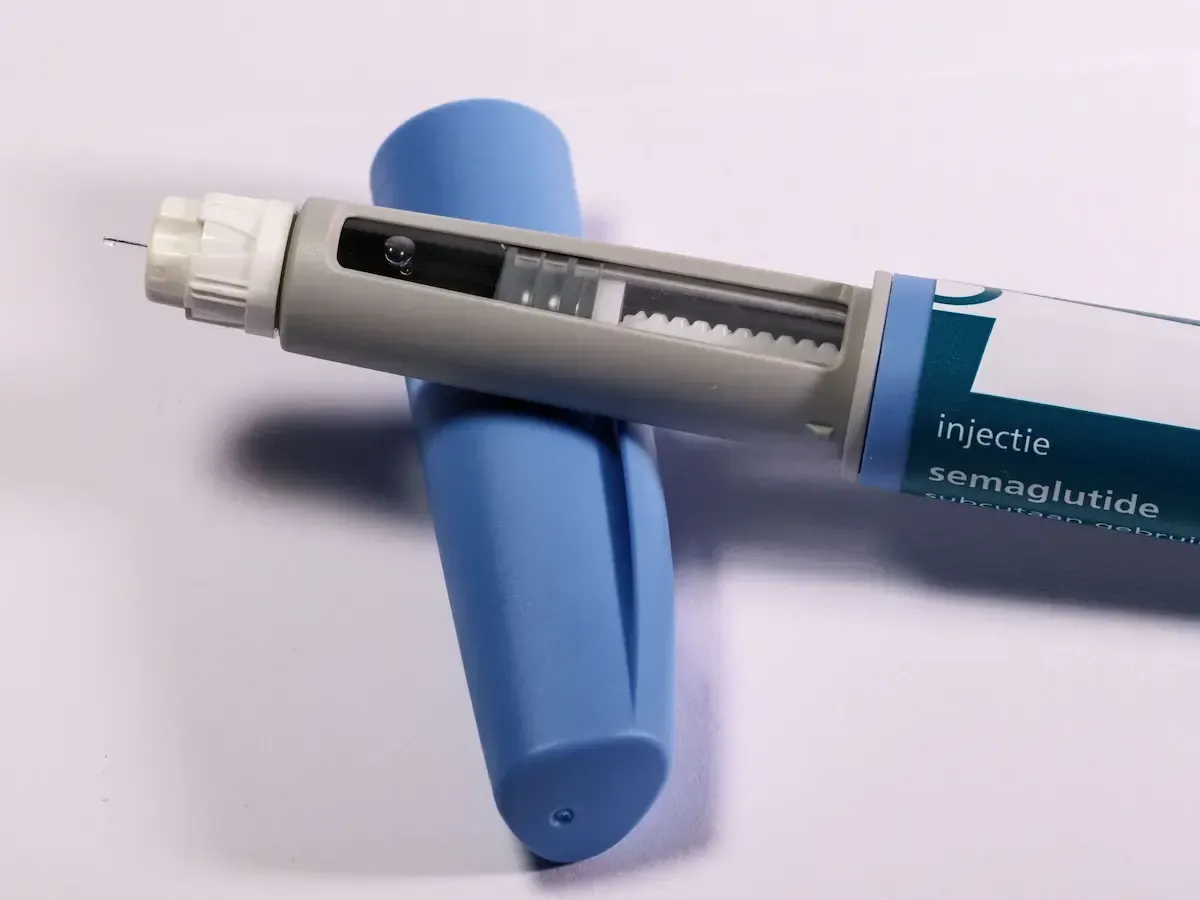
We're not here to tell you whether you should be on Ozempic and any GLP-1 medication. That conversation belongs between you and your doctor. And honestly? We know it's never that simple. The pressure to look a certain way is real. The medical system has complicated relationships with bodies that don't fit a narrow mold. And for a lot of people, starting a GLP-1 medication wasn't a casual decision. It came after years of navigating health concerns, provider recommendations, and a culture that never lets you forget what your body looks like. We see all of that. This post is for anyone who is currently taking a GLP-1 receptor agonist like semaglutide (sold as Ozempic or Wegovy), or who is in conversation with a provider about whether one might be appropriate. Either way, you deserve an honest, clinically grounded picture of what these medications actually do. The benefits, the nuance, and the risks that don't always make it into the conversation. 
By Jennifer Lancaster June 7, 2026
Trauma is often at the root of eating disorders. Learn how EMDR targets the memories, beliefs, and nervous system patterns that keep people stuck.

A ketamine therapist during a ketamine-assisted therapy session for eating disorder treatment in Houston.
By Jennifer Lancaster June 2, 2026
Eating disorders are neurologically entrenched. Learn how ketamine-assisted therapy opens new pathways for recovery — and how we approach it at HHC.

Three people sitting and talking on a patio with wicker chairs and a small table of flowers
By Jennifer Lancaster April 30, 2026
Learn how trauma-informed family therapy supports eating disorder healing in Houston, TX. Expert, compassionate guidance for families. Book a free consult.

Two people talking on a couch in a bright living room, one seated with knees hugged to chest
By Jennifer Lancaster April 30, 2026
Discover the trauma link behind eating disorders. Houston Healing Collective explores how unresolved trauma drives disordered eating. Book a free consult.

Two people talking in a bright counseling office, one holding a notebook.
By Jennifer Lancaster April 28, 2026
Explore body image therapy in Houston, TX — trauma-informed care to help you heal your relationship with food, body, and yourself. Book a free consult.

I'm Jennifer Lancaster

Most of the people I work with look fine from the outside. High-achieving, capable, holding everything together. Underneath that, there's usually longstanding complex trauma, a lot of self-criticism, and a deep exhaustion from never quite getting to the root of it.


I've spent 15 years training specifically in the areas that are considered really difficult to treat. I'm not a cookie-cutter therapist, and I work best with people who aren't looking for quick fixes. If this feels like you, feel free to book a free 15-minute consultation.

Recent Posts:

By Jennifer Lancaster June 10, 2026
We're not here to tell you whether you should be on Ozempic and any GLP-1 medication. That conversation belongs between you and your doctor. And honestly? We know it's never that simple. The pressure to look a certain way is real. The medical system has complicated relationships with bodies that don't fit a narrow mold. And for a lot of people, starting a GLP-1 medication wasn't a casual decision. It came after years of navigating health concerns, provider recommendations, and a culture that never lets you forget what your body looks like. We see all of that. This post is for anyone who is currently taking a GLP-1 receptor agonist like semaglutide (sold as Ozempic or Wegovy), or who is in conversation with a provider about whether one might be appropriate. Either way, you deserve an honest, clinically grounded picture of what these medications actually do. The benefits, the nuance, and the risks that don't always make it into the conversation. 
By Jennifer Lancaster June 7, 2026
Trauma is often at the root of eating disorders. Learn how EMDR targets the memories, beliefs, and nervous system patterns that keep people stuck.
A ketamine therapist during a ketamine-assisted therapy session for eating disorder treatment in Houston.
By Jennifer Lancaster June 2, 2026
Eating disorders are neurologically entrenched. Learn how ketamine-assisted therapy opens new pathways for recovery — and how we approach it at HHC.
Three people sitting and talking on a patio with wicker chairs and a small table of flowers
By Jennifer Lancaster April 30, 2026
Learn how trauma-informed family therapy supports eating disorder healing in Houston, TX. Expert, compassionate guidance for families. Book a free consult.
Two people talking on a couch in a bright living room, one seated with knees hugged to chest
By Jennifer Lancaster April 30, 2026
Discover the trauma link behind eating disorders. Houston Healing Collective explores how unresolved trauma drives disordered eating. Book a free consult.
Two people talking in a bright counseling office, one holding a notebook.
By Jennifer Lancaster April 28, 2026
Explore body image therapy in Houston, TX — trauma-informed care to help you heal your relationship with food, body, and yourself. Book a free consult.
Jennifer Lancaster practicing somatic breathwork in trauma-informed yoga for eating disorders
By Jennifer Lancaster April 26, 2026
Trauma-informed yoga for eating disorders rebuilds body connection through breathwork, somatic cues & nervous system regulation. Book a free consultation.
Stack of eating disorder recovery books on a marble countertop at a Houston eating disorder therapy
By Jennifer Lancaster April 26, 2026
Trauma is the missing piece in eating disorder recovery. Houston Healing uses EMDR, IFS & somatic therapy to go deeper. Book a free consultation.
Couple in a therapy session discussing desire discrepancy and sexual intimacy in Houston
By Jennifer Lancaster April 25, 2026
Different sex drives affect most couples. Learn what causes desire discrepancy, why emotional safety matters, and how couples therapy in Houston helps.
A couple in a  Houston therapy session with their therapist, ketamine-assisted couples therapy
By Jennifer Lancaster April 25, 2026
Some couples understand their patterns but still can't break free. Learn how ketamine-assisted couples therapy in Houston reaches where talk therapy can't.