




Complex PTSD Therapy in Houston: Why Standard Approaches Fall Short

Jennifer Lancaster • April 24, 2026

Share This Article:

You’ve done the work. You’ve sat across from a therapist, week after week, talking through the painful parts of your past. You’ve tried to make sense of your patterns, your reactions, your relationships. Maybe you’ve even made real progress. And yet — something still doesn’t feel right. You still find yourself triggered by things that “shouldn’t” bother you. Your body still goes on high alert in situations that feel safe on paper. Deep down, you wonder if you’re simply broken. Or if real, lasting change is just not in the cards for you.

You are not broken. But you may be dealing with something that requires more than what most therapy approaches are designed to offer.

If you’ve been living with the long-reaching effects of complex trauma — childhood neglect or abuse, ongoing emotional harm, years of feeling unsafe or unseen — and you still feel stuck despite doing the work, this is for you. There is a reason you’re not better yet. And there is a path forward.

What Is Complex PTSD, and How Is It Different From “Regular” PTSD?

Most people are familiar with the term PTSD — post-traumatic stress disorder — often associated with veterans, first responders, or survivors of a single catastrophic event like a car accident or natural disaster. This is sometimes called single-incident trauma or acute PTSD. It has a clear beginning and end. There was a thing that happened, and the nervous system got stuck trying to process it.

Complex PTSD (C-PTSD) is a very different story.

Complex PTSD develops in response to prolonged, repeated trauma — especially when that trauma occurred in the context of a relationship where you had little or no power to escape. This includes:

  • Childhood abuse (physical, emotional, sexual, or neglect)
  • Growing up with a parent struggling with addiction, mental illness, or unpredictability
  • Domestic violence or years in a controlling relationship
  • Chronic emotional invalidation or abandonment in early life
  • Systemic trauma — racism, poverty, and other forms of ongoing harm

When trauma is repeated, relational, and happens during developmentally critical periods, it doesn’t just leave a memory that needs processing. It shapes the nervous system itself. It affects how you learned to attach to others, how you regulate emotions, how you see yourself, and how safe you believe the world to be.

The symptoms of C-PTSD often look different from classic PTSD and can include:

  • Persistent shame and deeply negative beliefs about yourself (“I’m too much,” “I’m unlovable,” “Something is wrong with me”)
  • Difficulty trusting others, even when you want to
  • Emotional dysregulation — swinging between numbness and overwhelm
  • Feeling disconnected from your body or your sense of self
  • Chronic feelings of emptiness, hopelessness, or being fundamentally different from other people
  • Repeated patterns in relationships that mirror early wounds

This is why complex trauma survivors can spend years in therapy — sometimes genuinely helpful therapy — and still not feel free from their past.

Why Traditional Talk Therapy Often Falls Short for Complex Trauma

Let’s be clear: talk therapy has tremendous value. Building a trusting relationship with a skilled therapist matters enormously, especially when trust itself was wounded early in life. Gaining insight and understanding your patterns is meaningful work.

But insight alone rarely creates the deep neurobiological change that complex trauma requires.

Here’s why: traumatic memories — especially early, relational ones — are not stored the way ordinary memories are. They are encoded in the body, in the nervous system, in sensory fragments and emotional charges that live beneath the level of language and logic. You can understand intellectually why you react the way you do and still find yourself flooded with anxiety, frozen in the face of conflict, or numb when you want to feel connected.

Trauma research has made clear for decades that trauma is fundamentally a body and nervous system experience, not just a cognitive one. Traditional talk therapy primarily engages the prefrontal cortex — the thinking, reasoning brain. But trauma is stored in the deeper structures of the brain and nervous system — areas that don’t respond to logic or conversation the way we’d like them to.

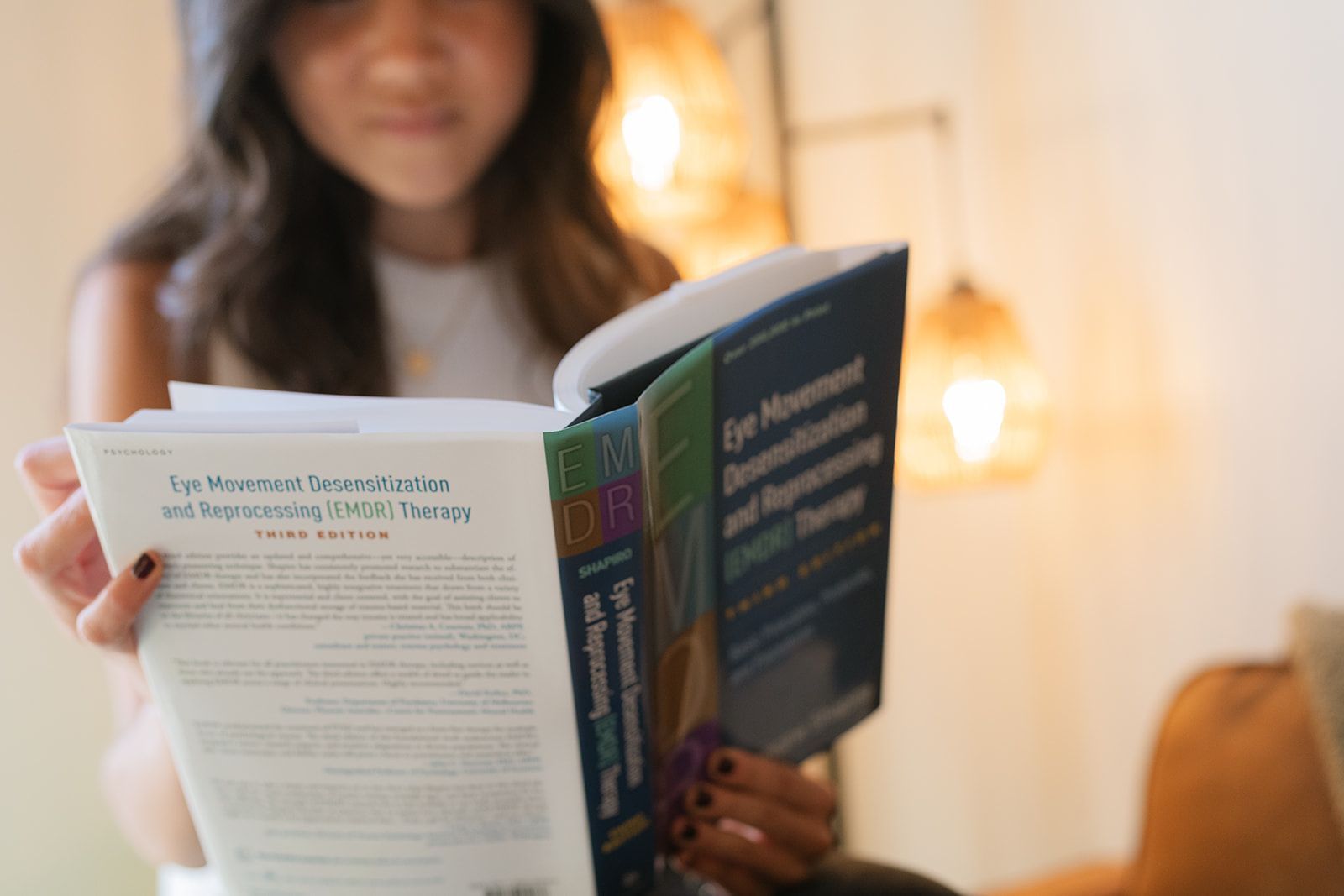
For single-incident trauma, a structured and evidence-based approach like traditional EMDR (Eye Movement Desensitization and Reprocessing) therapy can be remarkably effective. EMDR uses bilateral stimulation (eye movements, tapping, or auditory tones) to help the brain reprocess a stuck traumatic memory, so that it moves from something that feels present and dangerous to something that feels like the past. For many people with one or a few discrete traumatic events, traditional EMDR therapy can create profound shifts in a relatively short period of time.

But for complex PTSD — where the wounds are layered, developmental, and relational — even traditional EMDR can hit significant roadblocks.

Why Even Standard EMDR Isn’t Always Enough for Complex Trauma

EMDR is a powerful tool. We use it. We believe in it. But in complex trauma cases, standard EMDR protocols often encounter what clinicians call blocking beliefs or parts — internal protectors that have very good reasons to keep the deeper material locked away.

Imagine a part of you that learned, a long time ago, that letting anyone in — even a therapist — leads to abandonment or harm. That part isn’t irrational. It developed to protect you. But when you try to reprocess a painful memory using EMDR, that protective part may interfere: causing the session to feel unsafe, bringing up overwhelming emotion, or simply shutting the process down. You’re willing, the method is sound, and yet nothing moves.

This is one of the most frustrating experiences for complex trauma survivors — even in specialized trauma therapy. They want to make progress. They show up. But something inside won’t let it happen.

This is not resistance. This is a nervous system that learned to protect itself in the only ways it knew how. And it needs something different before — or alongside — the standard EMDR therapy approach.

This is exactly where our integrated, multi-modal trauma therapy in Houston makes the difference.

A More Complete Approach to Complex Trauma Therapy in Houston

At our practice, we don’t offer one-size-fits-all trauma therapy. We understand that complex trauma is — by definition — complex. It requires a layered, thoughtful approach that addresses not just the memories, but the internal parts carrying those memories, the nervous system that learned to survive by staying on guard, and the deeper neurological patterns that keep people stuck.

Here’s what that looks like in practice:

Developmental Needs Meeting Strategy (DNMS) in Houston

Many clients with complex PTSD carry wounds that formed before they had words — wounds rooted in unmet developmental needs. Maybe you never felt genuinely seen by a caregiver, or you didn’t have a safe adult to turn to when things were scary. These early experiences leave gaps — not just emotional ones, but neurological ones — in how you learned to regulate, attach, and experience yourself.

DNMS is a specialized approach designed specifically for these developmental wounds. Rather than simply reprocessing traumatic memories, DNMS works with the these parts that are still waiting for what they needed — safety, attunement, protection, love. By helping these parts receive what they missed in a reparative way — within the safety of the therapeutic relationship — DNMS addresses the foundation beneath the trauma, not just the trauma itself. This creates the internal stability that makes deeper trauma processing possible.

IFS-Informed Therapy in Houston: Working With Your Protective Parts

Internal Family Systems (IFS) therapy offers a compassionate, non-pathologizing lens for understanding the complex internal world of trauma survivors. At its core, IFS recognizes that we all have different “parts” — inner voices, protectors, and exiled emotions that developed for good reasons, even when they now create problems.

For complex trauma survivors, these protective parts are often running the show: the inner critic who attacks before others can, the people-pleaser who abandons your own needs to keep the peace, the part that goes numb when emotional intimacy gets close. Standard EMDR therapy can’t bypass these protectors — they’ll step in and block access to the deeper material.

IFS-informed work helps us meet these parts first. To understand why they developed, to acknowledge what they’ve been doing, and to gently — over time — help them step back so that deeper processing can happen. When protective parts feel safe enough to allow access to the vulnerable material beneath, the whole internal system begins to open up in ways that weren’t possible before.

Somatic Therapy and Trauma-Informed Yoga in Houston

Complex trauma lives in the body. No amount of talking, processing, or reframing changes the fact that your nervous system has been calibrated for danger — sometimes for decades. Somatic (body-based) approaches are essential for lasting change because they work directly with the nervous system rather than asking the body to simply follow the mind’s lead.

Our practice incorporates somatic therapy principles and trauma-informed yoga as part of an integrative treatment plan. Trauma-informed yoga is different from a standard yoga class. It is specifically designed to help trauma survivors safely reconnect with their bodies, build a sense of agency and choice, and gently regulate the nervous system — without risk of re-traumatization. Research has supported trauma-informed yoga as a meaningful complement to trauma therapy, helping survivors reclaim a sense of safety in their own skin.

When the body begins to come online — when the nervous system starts to feel safe enough to be in — the deeper therapeutic work becomes far more accessible.

EMDR Therapy in Houston: Targeted Memory Reprocessing

Once the foundation is built — once the protective parts have been met, the nervous system has some capacity to tolerate activation, and the developmental wounds have begun to receive what they need — EMDR therapy becomes extraordinarily effective.

Our therapists are trained in EMDR therapy and integrate it within this larger specialized framework, using it strategically to target specific memory networks and trauma charges. EMDR works by helping the brain complete what it couldn’t during the original traumatic experience: the natural processing cycle that gets interrupted during overwhelming events. When EMDR therapy is used within a supportive, integrative structure, the results for complex trauma survivors can be transformative.

Ketamine-Assisted Therapy in Houston: For Those Who Are Stuck or Ready to Go Deeper

For some complex trauma survivors, the layers run so deep — or the nervous system has been in protective lockdown for so long — that even a thorough, layered approach benefits from additional support. For these individuals, we offer ketamine-assisted therapy as part of a comprehensive treatment plan.

Ketamine is a legal, well-studied medication that, when administered in a therapeutic context, can promote neuroplasticity — the brain’s ability to form new neural connections. It can temporarily quiet the default mode network, the part of the brain associated with rumination and rigid self-narrative, creating a window of openness that is rare in ordinary states of consciousness. This can allow clients to access deeply buried material, experience themselves and their history from new perspectives, and integrate insights that may have felt out of reach before.

Ketamine-assisted therapy is not appropriate for everyone, and we work carefully to determine who may benefit. When it is a good fit, it can be a profound catalyst — particularly for those who feel they have tried everything and remain stuck.

Houston Healing Logo

Healing Beneath the Surface

If you're in Houston or anywhere in Texas, and something in this article felt familiar, you don't have to keep figuring it out alone. Reach out today and book a free 15 minute consultation.


Recent Posts

By Jennifer Lancaster June 10, 2026
We're not here to tell you whether you should be on Ozempic and any GLP-1 medication. That conversation belongs between you and your doctor. And honestly? We know it's never that simple. The pressure to look a certain way is real. The medical system has complicated relationships with bodies that don't fit a narrow mold. And for a lot of people, starting a GLP-1 medication wasn't a casual decision. It came after years of navigating health concerns, provider recommendations, and a culture that never lets you forget what your body looks like. We see all of that. This post is for anyone who is currently taking a GLP-1 receptor agonist like semaglutide (sold as Ozempic or Wegovy), or who is in conversation with a provider about whether one might be appropriate. Either way, you deserve an honest, clinically grounded picture of what these medications actually do. The benefits, the nuance, and the risks that don't always make it into the conversation. 
By Jennifer Lancaster June 7, 2026
Trauma is often at the root of eating disorders. Learn how EMDR targets the memories, beliefs, and nervous system patterns that keep people stuck.

A ketamine therapist during a ketamine-assisted therapy session for eating disorder treatment in Houston.
By Jennifer Lancaster June 2, 2026
Eating disorders are neurologically entrenched. Learn how ketamine-assisted therapy opens new pathways for recovery — and how we approach it at HHC.

Person holding EMDR bilateral stimulation buzzers during a ketamine-assisted EMDR therapy session
By Jennifer Lancaster May 3, 2026
KA-EMDR combines low-dose ketamine with EMDR to reach trauma that standard therapy can't. Houston Healing Collective explains how it works and who it's for

Three people sitting and talking on a patio with wicker chairs and a small table of flowers
By Jennifer Lancaster April 30, 2026
Learn how trauma-informed family therapy supports eating disorder healing in Houston, TX. Expert, compassionate guidance for families. Book a free consult.

Two people talking on a couch in a bright living room, one seated with knees hugged to chest
By Jennifer Lancaster April 30, 2026
Discover the trauma link behind eating disorders. Houston Healing Collective explores how unresolved trauma drives disordered eating. Book a free consult.

I'm Jennifer Lancaster

Most of the people I work with look fine from the outside. High-achieving, capable, holding everything together. Underneath that, there's usually longstanding complex trauma, a lot of self-criticism, and a deep exhaustion from never quite getting to the root of it.


I've spent 15 years training specifically in the areas that are considered really difficult to treat. I'm not a cookie-cutter therapist, and I work best with people who aren't looking for quick fixes. If this feels like you, feel free to book a free 15-minute consultation.

Recent Posts:

By Jennifer Lancaster June 10, 2026
We're not here to tell you whether you should be on Ozempic and any GLP-1 medication. That conversation belongs between you and your doctor. And honestly? We know it's never that simple. The pressure to look a certain way is real. The medical system has complicated relationships with bodies that don't fit a narrow mold. And for a lot of people, starting a GLP-1 medication wasn't a casual decision. It came after years of navigating health concerns, provider recommendations, and a culture that never lets you forget what your body looks like. We see all of that. This post is for anyone who is currently taking a GLP-1 receptor agonist like semaglutide (sold as Ozempic or Wegovy), or who is in conversation with a provider about whether one might be appropriate. Either way, you deserve an honest, clinically grounded picture of what these medications actually do. The benefits, the nuance, and the risks that don't always make it into the conversation. 
By Jennifer Lancaster June 7, 2026
Trauma is often at the root of eating disorders. Learn how EMDR targets the memories, beliefs, and nervous system patterns that keep people stuck.
A ketamine therapist during a ketamine-assisted therapy session for eating disorder treatment in Houston.
By Jennifer Lancaster June 2, 2026
Eating disorders are neurologically entrenched. Learn how ketamine-assisted therapy opens new pathways for recovery — and how we approach it at HHC.
Person holding EMDR bilateral stimulation buzzers during a ketamine-assisted EMDR therapy session
By Jennifer Lancaster May 3, 2026
KA-EMDR combines low-dose ketamine with EMDR to reach trauma that standard therapy can't. Houston Healing Collective explains how it works and who it's for
Three people sitting and talking on a patio with wicker chairs and a small table of flowers
By Jennifer Lancaster April 30, 2026
Learn how trauma-informed family therapy supports eating disorder healing in Houston, TX. Expert, compassionate guidance for families. Book a free consult.
Two people talking on a couch in a bright living room, one seated with knees hugged to chest
By Jennifer Lancaster April 30, 2026
Discover the trauma link behind eating disorders. Houston Healing Collective explores how unresolved trauma drives disordered eating. Book a free consult.
Two people talking in a bright counseling office, one holding a notebook.
By Jennifer Lancaster April 28, 2026
Explore body image therapy in Houston, TX — trauma-informed care to help you heal your relationship with food, body, and yourself. Book a free consult.
Jennifer Lancaster practicing somatic breathwork in trauma-informed yoga for eating disorders
By Jennifer Lancaster April 26, 2026
Trauma-informed yoga for eating disorders rebuilds body connection through breathwork, somatic cues & nervous system regulation. Book a free consultation.
Stack of eating disorder recovery books on a marble countertop at a Houston eating disorder therapy
By Jennifer Lancaster April 26, 2026
Trauma is the missing piece in eating disorder recovery. Houston Healing uses EMDR, IFS & somatic therapy to go deeper. Book a free consultation.
Couple in a therapy session discussing desire discrepancy and sexual intimacy in Houston
By Jennifer Lancaster April 25, 2026
Different sex drives affect most couples. Learn what causes desire discrepancy, why emotional safety matters, and how couples therapy in Houston helps.