



When Couples Therapy Isn’t Enough: Could Ketamine-Assisted Therapy in Houston Help?

Jennifer Lancaster • April 25, 2026

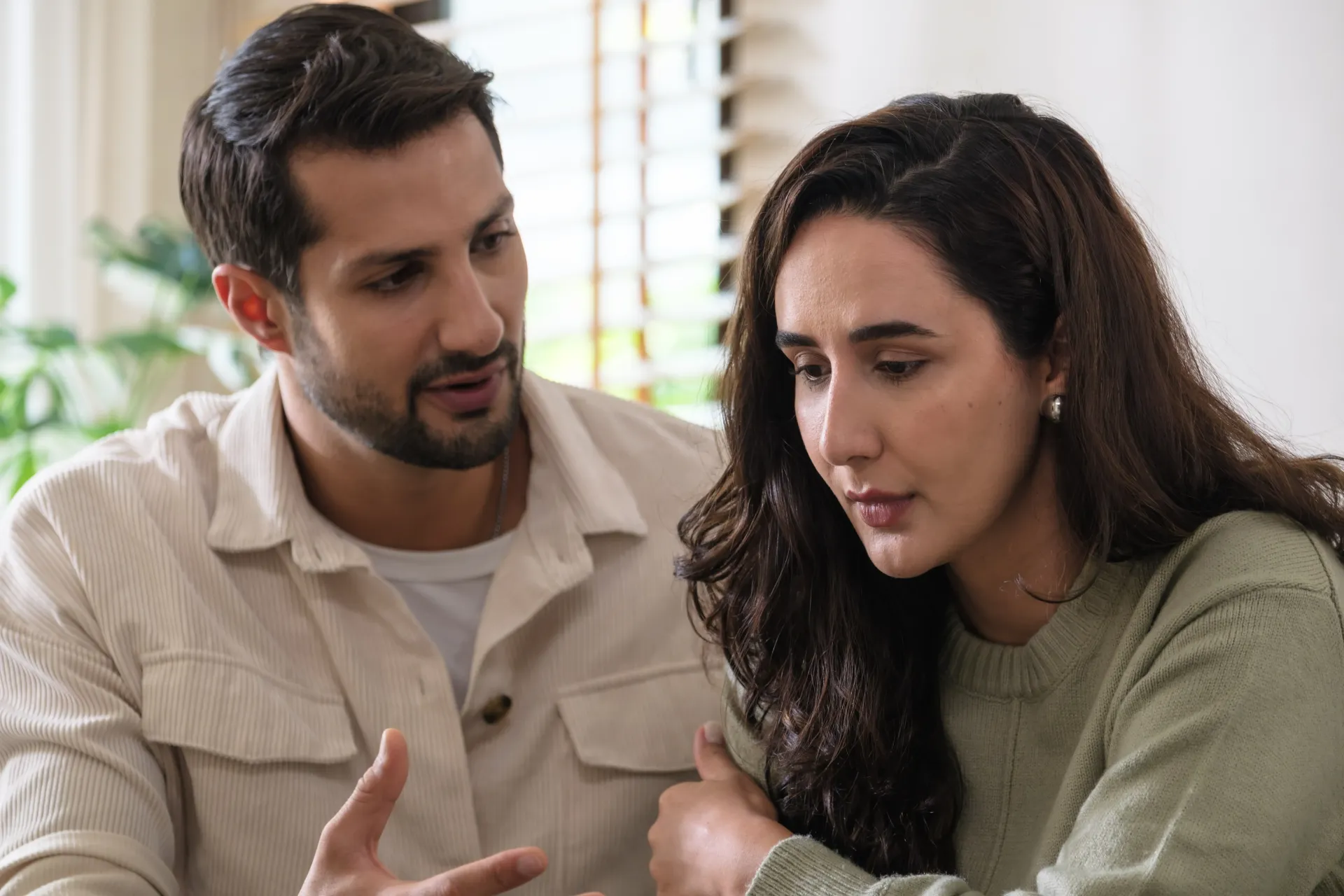
Most couples don’t walk into a therapist’s office lightly. By the time they get there, they’ve usually been struggling for a while — trying to work it out on their own, having the same arguments in different rooms, feeling the distance grow in ways that are hard to name but impossible to ignore.

And for many couples, therapy helps. A skilled therapist, the right approach, two people willing to do the work — that combination can shift things in meaningful ways.

But for some couples, even good therapy hits a wall. They’ve done the sessions. They understand their patterns intellectually. They can identify the cycle they get stuck in. And yet something deeper isn’t moving. The defensiveness, the emotional shutdown, the walls that go up the moment things get hard — these don’t budge no matter how much conscious effort both partners bring.

If that sounds familiar, you’re not failing therapy. You may simply need something that goes deeper than talk-based approaches alone can reach.

Ketamine-assisted therapy for couples is an emerging and genuinely promising option for exactly this situation — and the research behind it is growing.

Why Some Couples Get Stuck Even in Good Therapy

To understand why ketamine-assisted therapy can help couples, it helps to understand what keeps couples stuck in the first place.

Most entrenched relationship patterns are not primarily cognitive problems. They’re not solved by understanding why you react the way you do, or by learning better communication scripts, or by having insight into your attachment style — although all of those things matter. The patterns that are hardest to shift are stored deeper than that. They live in the nervous system, in the automatic responses that activate before conscious thought has a chance to intervene.

When one partner’s voice rises slightly and the other shuts down completely — that’s not a choice. It’s a threat response. When every attempt at vulnerability gets met with deflection — that’s not stubbornness. It’s a protective pattern the nervous system learned, often long before this relationship existed.

This is especially true for couples where one or both partners carry a history of trauma. Complex PTSD, childhood attachment wounds, betrayal trauma — these don’t stay in the individual. They move into the relationship, shaping how each person gives and receives connection, how conflict is navigated, and how safe emotional intimacy feels. Standard couples therapy, even excellent couples therapy using evidence-based approaches like EFT or the Gottman Method, can struggle to reach the neurological level where these patterns are actually held.

This is the gap that ketamine-assisted therapy is uniquely positioned to address.

What the Research Says About Ketamine and Couples Therapy

In 2024, researchers at UC San Diego and the VA San Diego Healthcare System published the first comprehensive clinical framework for ketamine-assisted couple therapy in the peer-reviewed journal Frontiers in Psychiatry . The paper outlines how the known mechanisms of ketamine — neuroplasticity, reduced emotional rigidity, decreased defensiveness, and increased cognitive flexibility — map directly onto the change mechanisms that evidence-based couples therapies are trying to activate.

In plain language, what good couples therapy is trying to accomplish neurologically, ketamine creates the conditions for.

A separate 2024 study published in the Journal of Psychedelic Studies examined couples who received ketamine in the context of structured couples group therapy. Participants described a range of meaningful therapeutic effects — increased empathy, a softening of the usual defensive responses, the ability to hear their partner in a way that felt qualitatively different from ordinary conversation. Some described it as finally being able to access something that had felt locked away.

This research is still emerging — ketamine-assisted couple therapy is not yet a widely established protocol, and we want to be transparent about that. But the theoretical foundation is solid, the early evidence is promising, and the clinical rationale is clear. For couples who have exhausted conventional approaches and remain stuck, it represents a genuinely meaningful option.

How Ketamine-Assisted Therapy Works for Couples

Ketamine produces several neurological effects that are particularly relevant to relationship work:

Increased neuroplasticity — ketamine promotes the brain’s ability to form new neural connections, creating a window of flexibility during which deeply entrenched patterns become more open to change. The rigid grooves that keep couples cycling through the same dynamics are temporarily loosened.

Reduced emotional defensiveness — one of ketamine’s most clinically relevant effects in the couples context is its ability to lower the defensive responses that block genuine connection. The partner who normally shuts down becomes more available. The partner who normally escalates becomes more regulated. The walls come down in a way that makes real contact possible.

Increased cognitive flexibility — ketamine supports the ability to see things from a different perspective, including a partner’s perspective. Couples who have been locked in opposing narratives — each certain of their own experience and unable to genuinely access the other’s — often describe a shift in this during ketamine sessions.

Quieting of the default mode network — the brain system responsible for rumination, rigid self-narrative, and the repetitive thought loops that keep conflict patterns entrenched is temporarily quieted. This creates space for something new to emerge in the relationship rather than the same script playing out again.

What Ketamine-Assisted Couples Therapy Actually Looks Like

At our Houston ketamine therapy practice , ketamine-assisted therapy for couples is never offered as a standalone intervention. It is one component of a carefully structured treatment plan that includes preparation, the medicine session itself, and thorough integration support — all held within an ongoing therapeutic relationship with trained ketamine therapists in-person in Houston.

Preparation

Before any ketamine is administered, both partners engage in preparation sessions with the couples therapist. This involves clarifying what each person is hoping to access, building the therapeutic alliance, and establishing a shared intention for the experience. Medical screening is conducted to ensure both partners are appropriate candidates. The preparation phase is not a formality — it directly shapes what becomes possible in the medicine session.

The Medicine Session

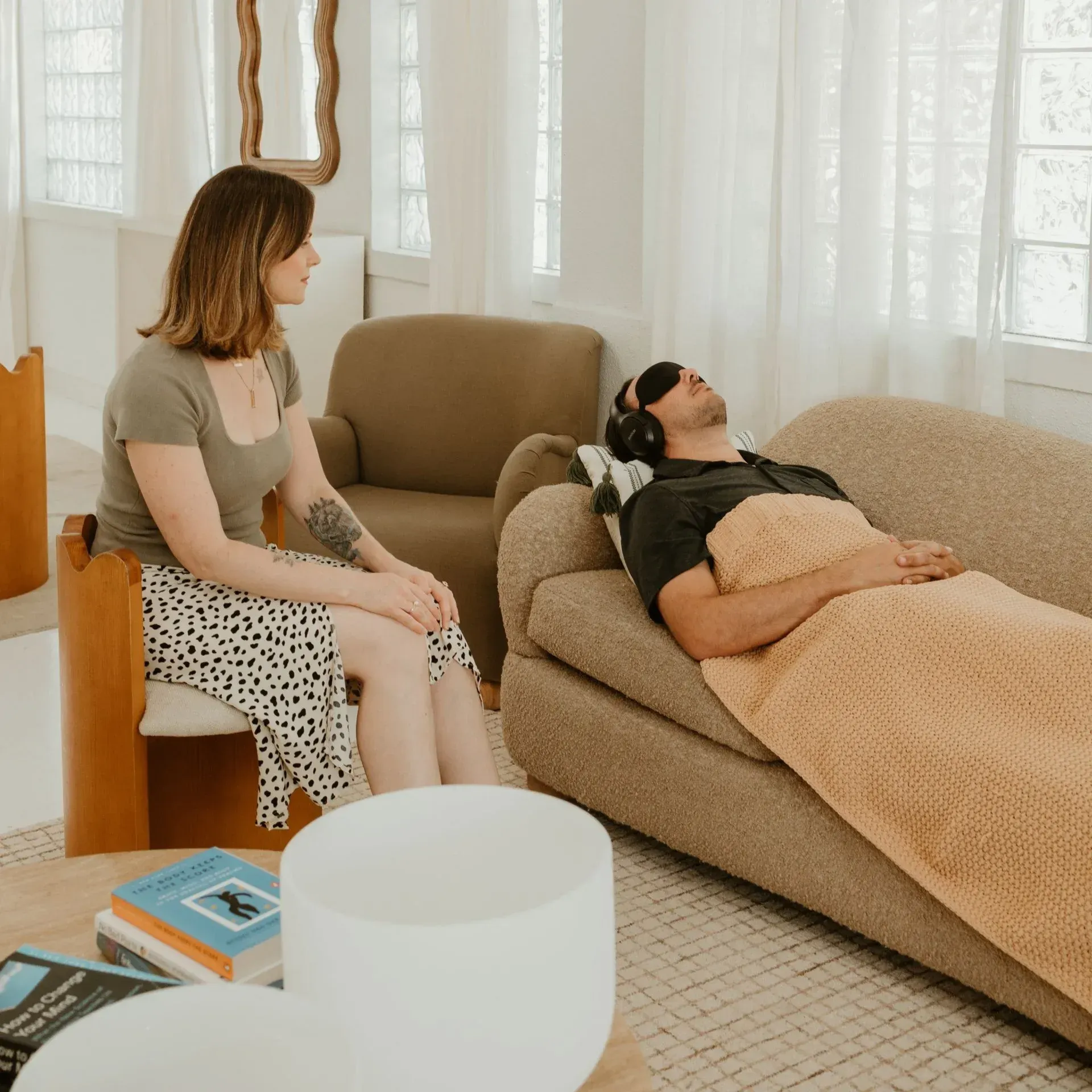
Ketamine can be administered to both partners simultaneously or individually depending on the clinical framework and the couple’s specific needs and goals. Sessions take place in a calm, carefully prepared environment with the couples therapist present throughout. The experience typically lasts between 45 minutes and two hours.

During the session, both partners may experience an altered state of consciousness — a softening of the usual defenses, a shift in how they perceive themselves and each other, access to emotional material that is normally guarded. The couples therapist’s role is to provide grounded support and gentle guidance, allowing whatever needs to emerge to do so safely.

Integration

Integration is where the couples therapy deepens. The ketamine session creates access and opens material — but without skilled integration, that opening closes without producing lasting change in the relationship dynamic.

In integration sessions, both partners process what they experienced — what shifted, what they noticed in themselves and each other, what felt different, and how to carry those shifts into their daily relationship. At our ketamine therapy practice in Houston, integration is woven into the ongoing couples therapy framework — connected to the EFT and Gottman Method work — so that whatever opens during the ketamine experience has somewhere meaningful to land.

Who Is Ketamine-Assisted Couples Therapy For?

This approach is not the right fit for every couple, and we assess couples carefully. It tends to be most relevant for:

Couples who have been in therapy and remain stuck — where both partners are genuinely committed to the work but something isn’t shifting despite sustained effort.

Couples where trauma is a significant factor — where one or both partners carry complex PTSD, attachment wounds, or betrayal trauma that is moving into the relationship and creating patterns that standard couples therapy hasn’t been able to reach.

Couples who are highly defended — where emotional walls, shutdown responses, or chronic conflict cycles are so entrenched that talk-based approaches struggle to create the safety needed for genuine connection.

Couples who want to go deeper — where the relationship is not in crisis but both partners feel they’ve plateaued and want access to a level of intimacy and connection that hasn’t been reachable through ordinary therapeutic work.

It is not appropriate for couples where either partner has contraindicated medical or psychiatric conditions, active substance use concerns, or where the relationship involves ongoing safety issues. A thorough assessment always precedes any decision to proceed.

How This Fits Into Our Approach to Couples Therapy in Houston

At our Houston ketamine therapy practice, ketamine-assisted therapy for couples sits within a broader integrative framework. Our couples therapists are trained in Emotionally Focused Therapy (EFT) and the Gottman Method — two of the most well-researched approaches available for relationship distress — and bring these into the preparation and integration phases of the ketamine work.

This means couples aren’t simply receiving a medication experience in isolation. They’re receiving it within a skilled therapeutic relationship. The work is done with a couples ketamine therapist who knows how to work with what emerges — how to use the window of openness that ketamine creates to do the deeper EFT and Gottman work that the entrenched patterns were previously blocking.

For couples in Houston who have tried conventional couples therapy and found themselves hitting the same walls, this integrated approach offers something genuinely different.

Taking the Next Step

If you’ve been in couples therapy in Houston and feel like something isn’t moving — or if you’re just beginning to explore options and want to understand everything available to you — we’d welcome a conversation.

We offer a free 20-minute consultation to help you understand whether ketamine-assisted therapy might be appropriate for your situation, what the process would look like, and how it might fit alongside or within an existing couples therapy framework.

You don’t have to keep hitting the same wall. Something different is available.

References

Cornfield, M., McBride, S., La Torre, J. T., Zalewa, D., Gallo, J., Mahammadli, M., & Williams, M. T. (2024). Exploring effects and experiences of ketamine in group couples therapy. Journal of Psychedelic Studies, 8 (2), 233–247. https://doi.org/10.1556/2054.2024.00302

Khalifian, C., Rashkovsky, K., Mitchell, E., Bismark, A., Wagner, A. C., & Knopp, K. C. (2024). A novel framework for ketamine-assisted couple therapy. Frontiers in Psychiatry, 15 , 1376646. https://doi.org/10.3389/fpsyt.2024.1376646

Houston Healing Logo

Healing Beneath the Surface

If you are in Houston and something in this article felt familiar, you don't have to keep figuring it out alone. Reach out today and book a free 15 minute consultation.


Recent Posts

Person holding EMDR bilateral stimulation buzzers during a ketamine-assisted EMDR therapy session
By Jennifer Lancaster May 3, 2026
KA-EMDR combines low-dose ketamine with EMDR to reach trauma that standard therapy can't. Houston Healing Collective explains how it works and who it's for.
Three people sitting and talking on a patio with wicker chairs and a small table of flowers
By Jennifer Lancaster April 30, 2026
When someone in a family is struggling with an eating disorder, the whole family feels it. Mealtimes become something to get through rather than something to share. Conversations get careful — everyone measuring their words, afraid of saying the wrong thing. Parents don’t know whether to push or back off. Partners feel shut out. And […] The post Family Therapy for Eating Disorders in Houston: A Trauma-Informed Approach appeared first on houstonhealingcollective.co.
Two people talking on a couch in a bright living room, one seated with knees hugged to chest
By Jennifer Lancaster April 30, 2026
Eating disorders develop from a combination of factors — genetics, environment, diet culture, perfectionism, and social media all play a role. But for many people these explanations are part of a larger, more complex picture. There’s a deeper connection that most of these explanations miss — one that research is increasingly confirming and that has […] The post What Causes Eating Disorders? The Missing Trauma Link appeared first on houstonhealingcollective.co.
Two people talking in a bright counseling office, one holding a notebook.
By Jennifer Lancaster April 28, 2026
If you’ve spent years at war with your body — cycling through diets, avoiding mirrors, shrinking yourself in photographs, or lying awake cataloguing everything you wish were different — you’ve probably heard a range of advice to practice more discipline, more self-acceptance, or more gratitude for what your body can do.
Jennifer Lancaster practicing somatic breathwork in trauma-informed yoga for eating disorders
By Jennifer Lancaster April 26, 2026
Trauma-informed yoga for eating disorders isn't about exercise, it's about body reconnection. Houston therapists explain how somatic practice supports recovery.
Stack of eating disorder recovery books on a marble countertop at a Houston eating disorder therapy
By Jennifer Lancaster April 26, 2026
Eating disorder recovery is hard when trauma goes untreated. Houston therapists explain the missing link, and how trauma-focused therapy changes everything.
Couple in a therapy session discussing desire discrepancy and sexual intimacy in Houston
By Jennifer Lancaster April 25, 2026
Different sex drives create real distance in relationships. Desire discrepancy affects most couples, learn what causes it and how couples therapy in Houston helps.
Client lying on a couch with eye mask during a ketamine-assisted psychotherapy session in Houston
By Jennifer Lancaster April 25, 2026
Ketamine-assisted psychotherapy combines low-dose ketamine with guided therapy to access what talk alone can't reach. Houston Healing Collective explains how.
Trauma therapist listening to a client during a betrayal trauma therapy session in Houston, Texas
By Jennifer Lancaster April 24, 2026
Betrayal trauma goes deeper than hurt feelings, it rewires your sense of safety. Houston trauma therapists explain what it is and how recovery is possible.
Houston trauma therapist Jamie attentively listening to a client during a complex PTSD therapy
By Jennifer Lancaster April 24, 2026
Complex PTSD doesn't respond to standard therapy. Houston therapists explain why talk therapy falls short and what deeper trauma treatment offers instead.

I'm Jennifer Lancaster

Most of the people I work with look fine from the outside. High-achieving, capable, holding everything together. Underneath that, there's usually longstanding complex trauma, a lot of self-criticism, and a deep exhaustion from never quite getting to the root of it.


I've spent 15 years training specifically in the areas that are considered really difficult to treat. I'm not a cookie-cutter therapist, and I work best with people who aren't looking for quick fixes. If this feels like you, feel free to book a free 15-minute consultation.

Recent Posts:

Person holding EMDR bilateral stimulation buzzers during a ketamine-assisted EMDR therapy session
By Jennifer Lancaster May 3, 2026
KA-EMDR combines low-dose ketamine with EMDR to reach trauma that standard therapy can't. Houston Healing Collective explains how it works and who it's for.
Three people sitting and talking on a patio with wicker chairs and a small table of flowers
By Jennifer Lancaster April 30, 2026
When someone in a family is struggling with an eating disorder, the whole family feels it. Mealtimes become something to get through rather than something to share. Conversations get careful — everyone measuring their words, afraid of saying the wrong thing. Parents don’t know whether to push or back off. Partners feel shut out. And […] The post Family Therapy for Eating Disorders in Houston: A Trauma-Informed Approach appeared first on houstonhealingcollective.co.
Two people talking on a couch in a bright living room, one seated with knees hugged to chest
By Jennifer Lancaster April 30, 2026
Eating disorders develop from a combination of factors — genetics, environment, diet culture, perfectionism, and social media all play a role. But for many people these explanations are part of a larger, more complex picture. There’s a deeper connection that most of these explanations miss — one that research is increasingly confirming and that has […] The post What Causes Eating Disorders? The Missing Trauma Link appeared first on houstonhealingcollective.co.
Two people talking in a bright counseling office, one holding a notebook.
By Jennifer Lancaster April 28, 2026
If you’ve spent years at war with your body — cycling through diets, avoiding mirrors, shrinking yourself in photographs, or lying awake cataloguing everything you wish were different — you’ve probably heard a range of advice to practice more discipline, more self-acceptance, or more gratitude for what your body can do.
Jennifer Lancaster practicing somatic breathwork in trauma-informed yoga for eating disorders
By Jennifer Lancaster April 26, 2026
Trauma-informed yoga for eating disorders isn't about exercise, it's about body reconnection. Houston therapists explain how somatic practice supports recovery.
Stack of eating disorder recovery books on a marble countertop at a Houston eating disorder therapy
By Jennifer Lancaster April 26, 2026
Eating disorder recovery is hard when trauma goes untreated. Houston therapists explain the missing link, and how trauma-focused therapy changes everything.
Couple in a therapy session discussing desire discrepancy and sexual intimacy in Houston
By Jennifer Lancaster April 25, 2026
Different sex drives create real distance in relationships. Desire discrepancy affects most couples, learn what causes it and how couples therapy in Houston helps.
Client lying on a couch with eye mask during a ketamine-assisted psychotherapy session in Houston
By Jennifer Lancaster April 25, 2026
Ketamine-assisted psychotherapy combines low-dose ketamine with guided therapy to access what talk alone can't reach. Houston Healing Collective explains how.
Trauma therapist listening to a client during a betrayal trauma therapy session in Houston, Texas
By Jennifer Lancaster April 24, 2026
Betrayal trauma goes deeper than hurt feelings, it rewires your sense of safety. Houston trauma therapists explain what it is and how recovery is possible.
Houston trauma therapist Jamie attentively listening to a client during a complex PTSD therapy
By Jennifer Lancaster April 24, 2026
Complex PTSD doesn't respond to standard therapy. Houston therapists explain why talk therapy falls short and what deeper trauma treatment offers instead.