


Ketamine for PTSD

Jennifer Lancaster • September 9, 2025

Share This Article:

If you've been in treatment for PTSD and something still hasn't shifted, you're not alone. And you're not failing.


You may simply be dealing with something that standard approaches, as valuable as they are, aren't fully equipped to reach.

Ketamine-assisted therapy is emerging as a meaningful option for people who have done the work. Who have insight. Who understand their trauma on an intellectual level and still find themselves stuck in the same patterns, the same reactions, the same physiological responses. This is what we see consistently in our work at Houston Healing Collective. It's why ketamine for PTSD, within the right therapeutic framework, can move things that have been stuck for a very long time.

Why is PTSD so Hard to Treat?

PTSD isn’t primarily a thinking problem. It’s a nervous system problem.

When trauma occurs — especially when it’s prolonged or relational — the nervous system doesn’t simply store it as a difficult memory. It reorganizes around it. You develop patterns of hypervigilance, avoidance, and disconnection that feel involuntary because they are — they’re neurological, not chosen.

This is why you can know, intellectually, that the trauma is in the past — you can understand your patterns, trace everything back to its origin — and still find yourself flooded, frozen, or shut down in ways that understanding can’t override. Knowing is not the same as feeling differently. Feeling differently is not the same as embodying something new. That gap between knowing and embodying is where PTSD lives — and where standard treatment often stalls.

If you’re interested in learning more about the differences between single-incident trauma and complex trauma, check out our blog on complex PTSD therapy in Houston.

What is Ketamine?

Ketamine is an anesthetic that has been used safely in medical settings for decades, first developed in the 1960s and approved by the FDA as an anesthetic in 1970. It has a long, well-established safety record in hospitals and clinical settings worldwide.

In recent years, researchers and clinicians began noticing something significant: at lower, sub-anesthetic doses, ketamine produced rapid and meaningful improvements in depression, anxiety, eating disorders, and PTSD — often in people who hadn’t responded to anything else. This led to a growing body of research and, eventually, a new clinical application: ketamine-assisted therapy.

Ketamine works primarily on glutamate — a neurotransmitter involved in learning, memory, and stress response — rather than serotonin, which is the target of most traditional antidepressants. This difference in mechanism is part of why ketamine can produce noticeable relief quickly, sometimes within hours of a session, rather than the weeks conventional medications typically require.

How Does Ketamine for PTSD Work?

Ketamine works through several distinct mechanisms that address PTSD at a level that other treatments don’t reach.

Neuroplasticity — Loosening What’s Been Rigid

Ketamine promotes neuroplasticity — the brain’s capacity to form new neural connections and reorganize existing ones. For people with PTSD, whose nervous systems have been running the same threat-response patterns for years or decades, this is clinically significant. The rigidity that keeps people stuck isn’t a character flaw. It’s neurological. Ketamine creates a biological window in which new patterns become possible — in which the brain can learn something different rather than defaulting to what it has always done.

Even when someone has insight into why they respond the way they do, those patterns are neurologically grooved. The nervous system defaults to what it knows. Insight can identify the pattern. Neuroplasticity is what creates the conditions to change it.

The Default Mode Network — Quieting the Story

Ketamine temporarily quiets what neuroscientists call the default mode network — the brain’s self-referential system, responsible for rumination, rigid self-narrative, and the story we tell about who we are and what happened to us. In PTSD, the default mode network is often overactive — looping through the same interpretations and beliefs shaped by traumatic experience. When ketamine quiets this system, something loosens. People often describe experiencing themselves and their history from a different vantage point — with less emotional charge, more perspective, and greater clarity than what has been accessible in ordinary states.

Widening the Window of Tolerance

Ketamine also widens the window of tolerance. It creates a physiological state in which traumatic material can be approached and processed without the nervous system collapsing into overwhelm or shutdown. Even people who are well-resourced and genuinely motivated to process their trauma sometimes find that the material itself is too activating to stay present with — the nervous system floods or shuts down before the work can happen. Ketamine changes this, creating the conditions for processing that weren’t possible before.

What the Research on Ketamine and PTSD Shows

A 2024 systematic review and meta-analysis found that ketamine significantly reduced PTSD symptom severity across multiple validated measures, including clinician-administered PTSD scales and self-report measures (Sicignano et al., 2024). A foundational randomized clinical trial from the Icahn School of Medicine at Mount Sinai found significant and rapid reductions in PTSD symptoms following a single ketamine infusion compared to an active placebo (Feder et al., 2014). The research base is growing, and what it consistently shows is that ketamine can produce meaningful reductions in PTSD symptoms — particularly for people who haven’t responded to standard treatments.

Ketamine-Assisted Therapy for PTSD: Why the Therapeutic Container Matters

Ketamine combined with skilled therapeutic support produces meaningfully better outcomes than ketamine as a standalone medical treatment. The difference is preparation, support during the session, and integration.

Preparation  happens before — building nervous system capacity, setting intentions, and incorporating somatic work so the nervous system can approach the experience with more openness and less reactivity.

Support during the session  means a trained psychedelic-assisted therapist is present throughout — guiding, grounding, and helping the experience feel safe rather than disorienting. This is what distinguishes ketamine-assisted therapy from a medical infusion clinic, where the medicine is administered and monitored, but the therapeutic relationship isn’t present in the room.

Integration  happens after — making sense of what emerged and translating insights into actual change.

Without this container, ketamine can produce profound experiences that don’t translate into sustained change. With it, the neuroplasticity ketamine creates has somewhere meaningful to go.

Types of Ketamine Treatments We Offer in Houston

Sublingual ketamine  — lozenges that dissolve under the tongue — is our preferred format for trauma work. Its slower onset and gentler intensity support emotional processing without overwhelming the system, and it pairs particularly well with EMDR integration. For clients doing K-EMDR, sublingual ketamine’s accessible, less clinical quality creates the right conditions for deeper trauma processing alongside the therapeutic work.

Intramuscular (IM) ketamine  creates a deeper, more immersive experience — appropriate for clients seeking a more intensive process or for whom sublingual hasn’t created sufficient shift.

IV ketamine  delivers the most precise dosing and fastest onset, typically in a more clinical setting.

All formats are administered within a comprehensive therapeutic framework — with preparation, in-session support, and integration — never as standalone medical treatments.

What to Expect During Ketamine Therapy for PTSD

Before treatment:  You’ll meet with your ketamine therapy team for a comprehensive assessment covering your symptoms, history, and goals. You will also complete a medical evaluation to ensure that ketamine therapy is safe for you. This is also where we begin the preparation work — building the therapeutic relationship and nervous system capacity that will support the medicine sessions.

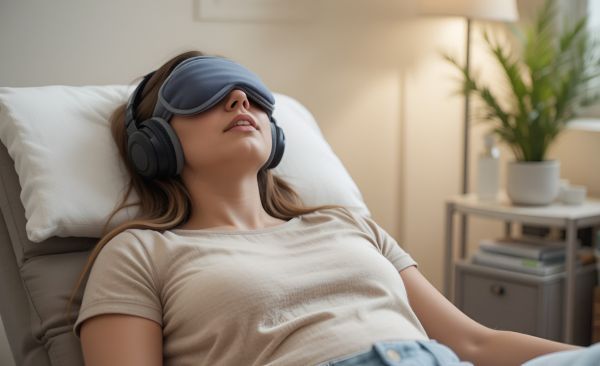
During a session:  Most people describe a state of relaxation and altered perception — a loosening of ordinary thought patterns, sometimes a sense of perspective or spaciousness that feels unfamiliar. Some people process emotional material directly. Others have experiences that feel more abstract or sensory. Sessions are guided by a trained therapist throughout.

After a session:  You may feel tired or emotionally tender immediately afterward. Many people notice shifts in mood, perspective, or symptom intensity in the days following. The integration work that follows is what helps these shifts become lasting.

Where to Find Ketamine for PTSD Treatment in Houston

Houston Healing Collective offers ketamine-assisted therapy for PTSD and complex trauma in Houston, Texas. Our team includes psychedelic-assisted therapists with specialized training in trauma, eating disorders, and treatment-resistant presentations. Our ketamine therapists are also trained in diverse trauma therapies to support integration, including EMDR, IFS-informed therapy, somatic approaches, and trauma-informed yoga, allowing them to treat the whole picture, not just the symptoms.

We offer sublingual, intramuscular, and IV ketamine for PTSD within a comprehensive therapeutic framework that includes preparation, in-session support, and integration. Every client is assessed carefully before beginning.

Contact us to schedule a free 15-minute consultation to see if ketamine for PTSD is right for you..

References

Feder, A., Parides, M. K., Murrough, J. W., Perez, A. M., Morgan, J. E., Saxena, S., Kirkwood, K., Aan Het Rot, M., Lapidus, K. A., Wan, L. B., Iosifescu, D., & Charney, D. S. (2014). Efficacy of intravenous ketamine for treatment of chronic posttraumatic stress disorder: A randomized clinical trial.  JAMA Psychiatry, 71 (8), 962–963.  https://pubmed.ncbi.nlm.nih.gov/24740528/

Sicignano, D. J., Kurschner, R., Weisman, N., Sedensky, A., Hernandez, A. V., & White, C. M. (2024). The impact of ketamine for treatment of post-traumatic stress disorder: A systematic review with meta-analyses.  Annals of Pharmacotherapy.   https://doi.org/10.1177/10600280231199666

Frequently Asked Questions

  • Does Ketamine Work for PTSD?

    Research supports ketamine as a meaningful treatment option for PTSD, particularly for people who haven’t responded to standard approaches. A 2024 systematic review found significant reductions in PTSD symptom severity across multiple validated measures. Results vary by individual, and ketamine works best when combined with skilled therapeutic preparation and integration rather than used as a standalone medical treatment.

  • How Is Ketamine-Assisted Therapy Different From Getting Ketamine Infusions at a Clinic?

    Ketamine-assisted therapy combines the medicine with skilled therapeutic support before, during, and after each session. The preparation work helps build nervous system capacity and set meaningful intentions. The integration work helps translate insights from the ketamine experience into actual change. This therapeutic container is what distinguishes KAP from medical ketamine infusion and is associated with significantly better outcomes for trauma.

  • How Many Ketamine Sessions Will I Need?

    This varies significantly by individual, trauma history, and treatment goals. We develop individualized treatment plans and don’t offer one-size-fits-all protocols. Most people complete a series of at least six ketamine sessions over three to six weeks, with integration work between each.

  • Is Ketamine for PTSD Safe?

    Ketamine has been used safely in medical settings for decades. In therapeutic contexts, side effects are typically mild and temporary — dizziness, nausea, or a brief sense of disorientation that resolves within hours. Clients receive a thorough medical and psychological screening before beginning treatment and every session is supported. At Houston Healing Collective, our ketamine therapists never leave a client alone during a ketamine session.

  • Where Can I Find Ketamine Therapy for PTSD in Houston?

    Houston Healing Collective offers ketamine-assisted therapy and ketamine-assisted EMDR for PTSD and complex trauma in Houston, Texas. Our team includes psychedelic-assisted therapists with specialized training in trauma. Contact us to schedule a free 20-minute consultation.

The post Ketamine for PTSD appeared first on houstonhealingcollective.co.

Houston Healing Logo

Healing Beneath the Surface

If you're in Houston or anywhere in Texas, and something in this article felt familiar, you don't have to keep figuring it out alone. Reach out today and book a free 15 minute consultation.


Recent Posts

By Jennifer Lancaster June 10, 2026
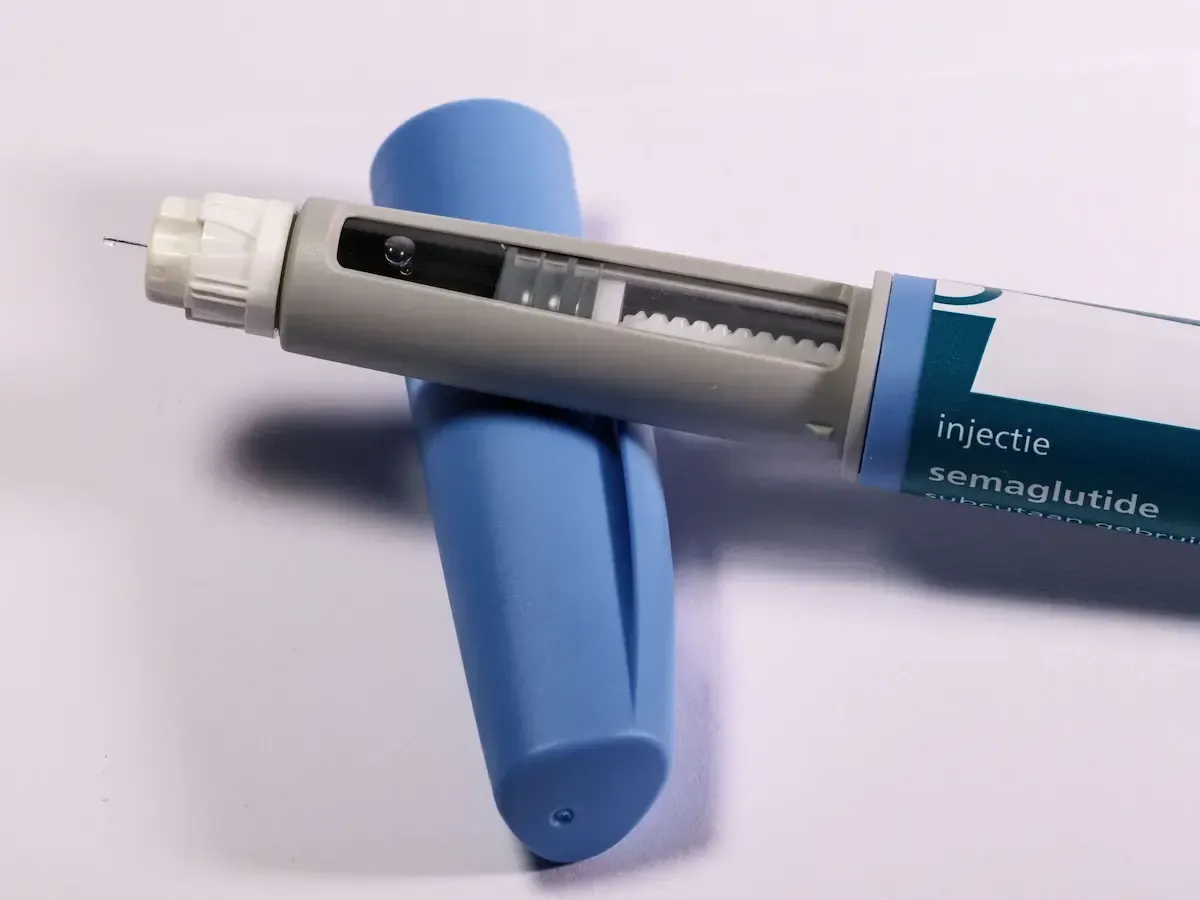
We're not here to tell you whether you should be on Ozempic and any GLP-1 medication. That conversation belongs between you and your doctor. And honestly? We know it's never that simple. The pressure to look a certain way is real. The medical system has complicated relationships with bodies that don't fit a narrow mold. And for a lot of people, starting a GLP-1 medication wasn't a casual decision. It came after years of navigating health concerns, provider recommendations, and a culture that never lets you forget what your body looks like. We see all of that. This post is for anyone who is currently taking a GLP-1 receptor agonist like semaglutide (sold as Ozempic or Wegovy), or who is in conversation with a provider about whether one might be appropriate. Either way, you deserve an honest, clinically grounded picture of what these medications actually do. The benefits, the nuance, and the risks that don't always make it into the conversation. 
By Jennifer Lancaster June 7, 2026
Trauma is often at the root of eating disorders. Learn how EMDR targets the memories, beliefs, and nervous system patterns that keep people stuck.

A ketamine therapist during a ketamine-assisted therapy session for eating disorder treatment in Houston.
By Jennifer Lancaster June 2, 2026
Eating disorders are neurologically entrenched. Learn how ketamine-assisted therapy opens new pathways for recovery — and how we approach it at HHC.

Person holding EMDR bilateral stimulation buzzers during a ketamine-assisted EMDR therapy session
By Jennifer Lancaster May 3, 2026
KA-EMDR combines low-dose ketamine with EMDR to reach trauma that standard therapy can't. Houston Healing Collective explains how it works and who it's for

Three people sitting and talking on a patio with wicker chairs and a small table of flowers
By Jennifer Lancaster April 30, 2026
Learn how trauma-informed family therapy supports eating disorder healing in Houston, TX. Expert, compassionate guidance for families. Book a free consult.

Two people talking on a couch in a bright living room, one seated with knees hugged to chest
By Jennifer Lancaster April 30, 2026
Discover the trauma link behind eating disorders. Houston Healing Collective explores how unresolved trauma drives disordered eating. Book a free consult.

I'm Jennifer Lancaster

Most of the people I work with look fine from the outside. High-achieving, capable, holding everything together. Underneath that, there's usually longstanding complex trauma, a lot of self-criticism, and a deep exhaustion from never quite getting to the root of it.


I've spent 15 years training specifically in the areas that are considered really difficult to treat. I'm not a cookie-cutter therapist, and I work best with people who aren't looking for quick fixes. If this feels like you, feel free to book a free 15-minute consultation.

Recent Posts:

By Jennifer Lancaster June 10, 2026
We're not here to tell you whether you should be on Ozempic and any GLP-1 medication. That conversation belongs between you and your doctor. And honestly? We know it's never that simple. The pressure to look a certain way is real. The medical system has complicated relationships with bodies that don't fit a narrow mold. And for a lot of people, starting a GLP-1 medication wasn't a casual decision. It came after years of navigating health concerns, provider recommendations, and a culture that never lets you forget what your body looks like. We see all of that. This post is for anyone who is currently taking a GLP-1 receptor agonist like semaglutide (sold as Ozempic or Wegovy), or who is in conversation with a provider about whether one might be appropriate. Either way, you deserve an honest, clinically grounded picture of what these medications actually do. The benefits, the nuance, and the risks that don't always make it into the conversation. 
By Jennifer Lancaster June 7, 2026
Trauma is often at the root of eating disorders. Learn how EMDR targets the memories, beliefs, and nervous system patterns that keep people stuck.
A ketamine therapist during a ketamine-assisted therapy session for eating disorder treatment in Houston.
By Jennifer Lancaster June 2, 2026
Eating disorders are neurologically entrenched. Learn how ketamine-assisted therapy opens new pathways for recovery — and how we approach it at HHC.
Person holding EMDR bilateral stimulation buzzers during a ketamine-assisted EMDR therapy session
By Jennifer Lancaster May 3, 2026
KA-EMDR combines low-dose ketamine with EMDR to reach trauma that standard therapy can't. Houston Healing Collective explains how it works and who it's for
Three people sitting and talking on a patio with wicker chairs and a small table of flowers
By Jennifer Lancaster April 30, 2026
Learn how trauma-informed family therapy supports eating disorder healing in Houston, TX. Expert, compassionate guidance for families. Book a free consult.
Two people talking on a couch in a bright living room, one seated with knees hugged to chest
By Jennifer Lancaster April 30, 2026
Discover the trauma link behind eating disorders. Houston Healing Collective explores how unresolved trauma drives disordered eating. Book a free consult.
Two people talking in a bright counseling office, one holding a notebook.
By Jennifer Lancaster April 28, 2026
Explore body image therapy in Houston, TX — trauma-informed care to help you heal your relationship with food, body, and yourself. Book a free consult.
Jennifer Lancaster practicing somatic breathwork in trauma-informed yoga for eating disorders
By Jennifer Lancaster April 26, 2026
Trauma-informed yoga for eating disorders rebuilds body connection through breathwork, somatic cues & nervous system regulation. Book a free consultation.
Stack of eating disorder recovery books on a marble countertop at a Houston eating disorder therapy
By Jennifer Lancaster April 26, 2026
Trauma is the missing piece in eating disorder recovery. Houston Healing uses EMDR, IFS & somatic therapy to go deeper. Book a free consultation.
Couple in a therapy session discussing desire discrepancy and sexual intimacy in Houston
By Jennifer Lancaster April 25, 2026
Different sex drives affect most couples. Learn what causes desire discrepancy, why emotional safety matters, and how couples therapy in Houston helps.