




How to Choose the Right Eating Disorder Treatment

Jennifer Lancaster • February 24, 2026

Share This Article:

What to Look For in Eating Disorder Counseling

If you are searching for eating disorder counseling in Houston or Texas, you already know something important. You know you need help. That takes real courage. But finding the right eating disorder treatment can feel just as overwhelming as the eating disorder itself.

Not all eating disorder therapy is the same. Some therapists specialize in eating disorders and have years of training. Others may mean well but lack the skills to treat complex conditions like anorexia nervosa, bulimia nervosa, binge eating disorder, or ARFID. The wrong fit can slow your recovery or even cause harm.

This guide will help you tell the difference. You will learn the green flags that signal quality eating disorder treatment and the red flags that suggest a therapist may not be the right match. Whether you need outpatient therapy, an intensive outpatient program, or a treatment center near Houston, knowing what to look for protects your healing journey. If you are just starting your search, our guide on how to find an eating disorder therapist in Houston walks you through the full process step by step.

At Houston Healing Collective, we have seen how the right eating disorder therapist changes lives. We have also seen the damage that happens when people receive care from providers who do not specialize in eating disorders. You deserve treatment that actually works.


What You Will Learn in This Guide

In this article, you will discover what makes eating disorder treatment different from general talk therapy. You will learn specific green flags to look for when choosing a therapist in Houston, TX, and red flags to watch out for. We cover evidence-based treatment options for eating disorders, how to decide between outpatient counseling and eating disorder treatment centers in Houston, and frequently asked questions about eating disorder treatment that can help you find the right path forward.


Why Choosing the Right Eating Disorder Treatment Matters

Eating disorders are serious mental health conditions. They have the highest mortality rate of any psychiatric illness. Anorexia nervosa, bulimia nervosa, binge eating disorder, and other eating disorders affect your body, your mind, your relationships, and your daily life. Recovery requires a therapist who understands just how complex these conditions are.

General therapy can help with many concerns. But eating disorders need specialized treatment. A therapist without eating disorder training may accidentally reinforce disordered eating patterns, focus too much on body weight instead of root causes, or miss the signs that someone is getting worse. The right eating disorder therapy addresses not just your eating but the anxiety, trauma, depression, perfectionism, and intense fear of losing control that drive the disorder.

Research shows that people who receive evidence-based treatment from eating disorder specialists have better outcomes. They build a healthier relationship with food and their body for the long term.


What Makes Eating Disorder Therapy Different from General Counseling?

Many people wonder why they cannot just see a regular therapist for eating disorder treatment. The answer is that eating disorders are medically and psychologically complex. They often involve co-occurring conditions like anxiety, depression, OCD, and trauma. They affect your physical and emotional health, your relationship with food, and your body image all at the same time.

Specialized eating disorder therapy includes understanding the medical risks of restriction, binge eating, purging, and compulsive exercise. It requires knowledge of evidence-based treatment approaches designed specifically for eating disorders. And it means working as part of a care team that often includes a dietitian, therapist, psychiatrist, and medical providers.

A general therapist might focus only on your emotions without addressing disordered eating behaviors. Or they might restrict your eating without understanding the deeper psychological wounds. Quality eating disorder treatment in Houston, TX connects all of these pieces together so therapy can help you finally heal.


Green Flags: Signs of Quality Eating Disorder Treatment

When you are looking for an eating disorder therapist in Houston , these green flags tell you a provider takes eating disorder treatment seriously.

They specialize in eating disorders. The therapist has specific training beyond general mental health. They can name the evidence-based treatment approaches they use and explain how those approaches work. They have treated multiple types of eating disorders including anorexia, bulimia, binge eating disorder, and ARFID. They understand food intake concerns, adolescent presentations, and chronic eating disorders in adults.

They take a Health at Every Size approach. Quality eating disorder therapy does not focus on weight loss or body weight as goals. A HAES approach and intuitive eating philosophy mean the therapist treats your eating disorder without reinforcing diet culture. They focus on healing your relationship with food and your body image rather than changing your body.

They use a team-based care approach. Good eating disorder treatment involves collaboration. Your therapist should work with a dietitian who provides nutritional counseling, medical doctors, and sometimes a psychiatrist. This team approach provides the level of care you need for comprehensive eating disorder recovery. You can learn more about our eating disorder specialists and their training on our team page.

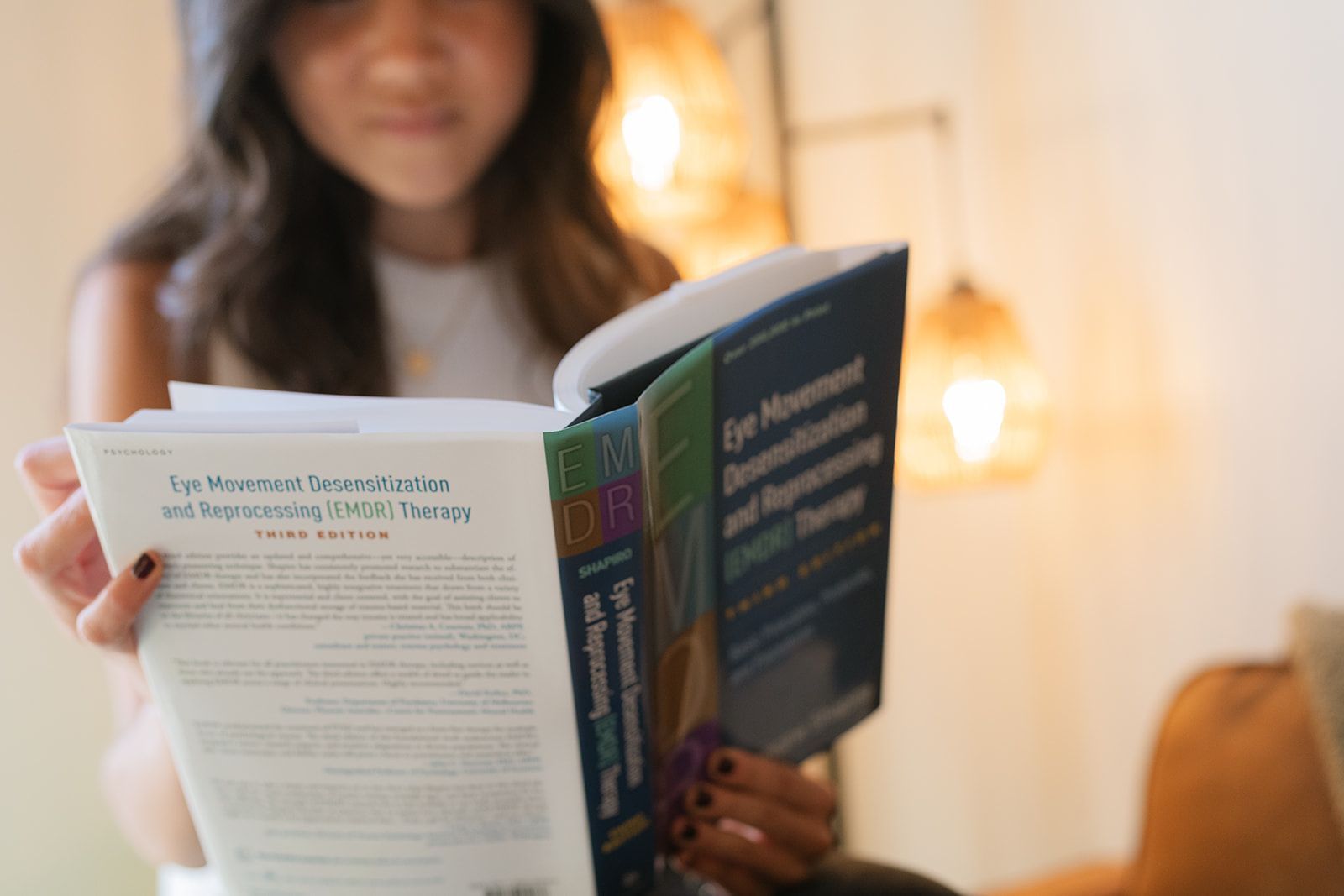
They offer trauma-informed care. Many eating disorders are connected to trauma. A qualified eating disorder therapist in Houston understands these links and may integrate trauma-focused therapies such as EMDR, Cognitive Processing Therapy, or Trauma-Focused CBT when appropriate.

They welcome your questions about eating disorder treatment. A good therapist answers openly. They explain their treatment plan, what sessions look like, and how they measure progress. If you are seeking help for an adolescent, they discuss family therapy options and how family-based treatment supports recovery from eating disorders.


Red Flags: Warning Signs to Avoid in Eating Disorder Counseling

Just as there are green flags, there are warning signs. Watch for these red flags when evaluating eating disorder treatment options.

They focus on body weight as the measure of progress. If a therapist tracks your weight as the main sign of recovery, that is a red flag. Eating disorder recovery is about healing your relationship with food, addressing poor body image, and resolving the emotional patterns driving the disorder. While weight gain might be needed to help you stabilize or recover, weight alone doesn’t define healing.

They promote diets or restrictive food rules. Any eating disorder therapist who encourages cutting out food groups, counting calories, or using behaviors to prevent weight gain is reinforcing disordered eating. Quality treatment moves away from restriction, not toward it.

They do not specialize in eating disorders. A therapist who says they treat everything including eating disorders but cannot describe their specific training is a concern. Eating disorders require specialized treatment that goes beyond general counseling skills. Look for someone who truly specializes.

They work alone without a treatment team. Eating disorder treatment requires multiple providers. A therapist working without connections to a dietitian and medical providers may miss critical health consequences. This is especially important for anorexia nervosa where medical monitoring saves lives.

They dismiss your experience. If a therapist tells you that your eating disorder is not serious enough for treatment, or that you do not look like you have an eating disorder, seek help elsewhere. Eating disorders affect people of every body size, gender, and age. Whether you are an adolescent or an adult, struggling with an eating disorder deserves expert care.


What Treatment Approaches Work Best for Eating Disorders?

When evaluating eating disorder treatment in Houston, TX, ask about the specific evidence-based approaches a therapist uses.

Dialectical behavior therapy helps people manage intense emotions, reduce binge eating and purging, and develop healthier coping skills. It is helpful when eating disorders are connected to anxiety, depression, or difficulty regulating emotions.

Internal Family Systems therapy helps clients understand and heal the different internal “parts” that drive eating disorder behaviors. This approach supports self-compassion and reduces internal conflict around food, body image, and control.

Acceptance and Commitment Therapy helps individuals build psychological flexibility. Clients learn to tolerate uncomfortable thoughts and feelings without turning to eating disorder behaviors, while moving toward their values and long-term recovery goals.

Family therapy is essential for adolescent eating disorder treatment. Family-based treatment helps the entire family understand the eating disorder and actively support recovery. This approach is especially effective for teens with anorexia nervosa.

Psychotherapy combined with nutritional counseling from an eating disorder dietitian creates a comprehensive treatment program. The best eating disorder therapists tailor treatment to your specific needs, whether you are an adolescent, college student, or adult seeking recovery.


Should You Choose Outpatient Counseling or a Treatment Center?

One of the biggest questions about eating disorder treatment is whether you need outpatient therapy or a higher level of care.

Outpatient eating disorder therapy means you attend sessions one or more times per week while living at home. This works well if your eating disorder is not causing immediate medical danger, you can manage meals between sessions, and you have some support. Many people recover fully through outpatient treatment with a skilled eating disorder therapist in Houston.

Intensive outpatient programs provide more structure. You attend treatment several hours a day, several days a week, often in an outpatient setting that includes group therapy, individual sessions, and meal support.

Eating disorder treatment centers, including residential treatment programs, offer the highest level of care. Programs like Eating Recovery Center, Monte Nido, Center for Discovery in Cypress, and other eating disorder treatment centers in Houston and near Houston provide around-the-clock support for people with severe eating disorders. The Houston Center for Eating Disorders at UTHealth Houston also provides specialized eating disorder programs.

Your eating disorder therapist can help determine the right level of care. Whether you start with outpatient counseling or need a treatment center, taking that first step matters most. Treatment typically progresses from higher levels of care to outpatient as you stabilize and build skills for lasting recovery.


How to Choose a Quality Eating Disorder Therapist

Finding the right therapist for eating disorder treatment takes some research. Here is how to evaluate whether a Houston eating disorder therapist is a good match.

Check their credentials and training. Look for licensed therapists who have completed additional training specific to eating disorders. Ask where they trained and how long they have been treating eating disorders. Do they specialize in eating disorders, or is it one of many things they treat? Our guide on how to find an eating disorder therapist in Houston covers the full checklist of qualifications to look for.

Ask about their treatment philosophy. Do they take a Health at Every Size approach? Do they use evidence-based treatment for eating disorders? How do they help adolescent clients differently than adults? Their answers reveal the quality of care you can expect.

Find out about their care team. Quality eating disorder treatment in Houston involves collaboration with a dietitian, medical providers, and sometimes a psychiatrist. Look for in-person sessions at their Houston office and virtual eating disorder therapy options across TX.

Consider practical details. Do they offer online eating disorder therapy? What is their availability? How do they handle urgent concerns? These details matter for your comfort and safety throughout your eating disorder recovery.


Frequently Asked Questions About Eating Disorder Treatment

  • How do I know if I may have an eating disorder?

    If food and your body cause you significant stress, anxiety, or shame, eating disorder counseling can help. Signs include consuming a large amount of food and feeling out of control, restricting food intake, purging, compulsive exercise, or intense fear around food. You do not need to meet every diagnostic criterion. If disordered eating affects your daily life, seek help.

  • Can I do virtual eating disorder therapy?

    Yes. Online eating disorder treatment is effective for many people. Virtual sessions provide access to eating disorder specialists you might not find locally. Houston Healing Collective provides virtual eating disorder therapy to clients throughout TX.


  • How long does eating disorder treatment typically take?

    Recovery timelines vary. Treatment typically depends on the type and severity of your eating disorder, co-occurring conditions, your level of care, and family support. Some people see progress in months. Others benefit from longer-term treatment. What matters is finding the right treatment and staying with it.

  • What if I need help for my adolescent?

    Adolescent eating disorders require specialized approaches. Family therapy and family-based treatment are among the best eating disorder treatment options for teens. Look for a therapist who has experience with adolescent clients and can involve your family in the recovery process.

  • What is the difference between an eating disorder therapist and a regular therapist?

    An eating disorder therapist has specialized training in the medical, psychological, and behavioral aspects of eating disorders. They use evidence-based treatment, work with a care team including a dietitian, and understand conditions like anorexia nervosa, bulimia nervosa, binge eating disorder, and ARFID. General therapists may lack this expertise, and that gap can slow recovery from eating disorders.


Next Steps: Start Your Eating Disorder Recovery in Houston

Finding quality eating disorder treatment is one of the most important steps you can take for your health. Now you know what green flags to look for and what red flags to avoid. You understand the evidence-based treatment options that work, the questions to ask, and how to help you find the right eating disorder therapist.

You do not have to figure this out alone. Recovery from eating disorders is possible with the right treatment and the right support.

At Houston Healing Collective, our eating disorder specialists are here to help. We provide compassionate, evidence-based eating disorder treatment for people at every stage of recovery. Our therapists specialize in eating disorders including anorexia, bulimia, binge eating disorder, and ARFID. We offer EMDR for trauma, dialectical behavior therapy, cognitive behavioral therapy (CBT) and acceptance and commitment therapy (ACT), family therapy, trauma-informed care , and trauma-informed yoga for eating disorder recovery.

We take a Health at Every Size and intuitive eating approach. We provide both in-person therapy in Bellaire and virtual eating disorder therapy across TX.

Ready to find eating disorder treatment that works?

Contact Houston Healing Collective today to schedule a free 15-minute consultation. Therapy can help you finally build a healthier relationship with food and your body. You deserve the right treatment from eating disorder specialists who truly get it.

Houston Healing Logo

Healing Beneath the Surface

If you're in Houston or anywhere in Texas, and something in this article felt familiar, you don't have to keep figuring it out alone. Reach out today and book a free 15 minute consultation.


Recent Posts

By Jennifer Lancaster June 10, 2026
We're not here to tell you whether you should be on Ozempic and any GLP-1 medication. That conversation belongs between you and your doctor. And honestly? We know it's never that simple. The pressure to look a certain way is real. The medical system has complicated relationships with bodies that don't fit a narrow mold. And for a lot of people, starting a GLP-1 medication wasn't a casual decision. It came after years of navigating health concerns, provider recommendations, and a culture that never lets you forget what your body looks like. We see all of that. This post is for anyone who is currently taking a GLP-1 receptor agonist like semaglutide (sold as Ozempic or Wegovy), or who is in conversation with a provider about whether one might be appropriate. Either way, you deserve an honest, clinically grounded picture of what these medications actually do. The benefits, the nuance, and the risks that don't always make it into the conversation. 
By Jennifer Lancaster June 7, 2026
Trauma is often at the root of eating disorders. Learn how EMDR targets the memories, beliefs, and nervous system patterns that keep people stuck.

A ketamine therapist during a ketamine-assisted therapy session for eating disorder treatment in Houston.
By Jennifer Lancaster June 2, 2026
Eating disorders are neurologically entrenched. Learn how ketamine-assisted therapy opens new pathways for recovery — and how we approach it at HHC.

Person holding EMDR bilateral stimulation buzzers during a ketamine-assisted EMDR therapy session
By Jennifer Lancaster May 3, 2026
KA-EMDR combines low-dose ketamine with EMDR to reach trauma that standard therapy can't. Houston Healing Collective explains how it works and who it's for

Three people sitting and talking on a patio with wicker chairs and a small table of flowers
By Jennifer Lancaster April 30, 2026
Learn how trauma-informed family therapy supports eating disorder healing in Houston, TX. Expert, compassionate guidance for families. Book a free consult.

Two people talking on a couch in a bright living room, one seated with knees hugged to chest
By Jennifer Lancaster April 30, 2026
Discover the trauma link behind eating disorders. Houston Healing Collective explores how unresolved trauma drives disordered eating. Book a free consult.

I'm Jennifer Lancaster

Most of the people I work with look fine from the outside. High-achieving, capable, holding everything together. Underneath that, there's usually longstanding complex trauma, a lot of self-criticism, and a deep exhaustion from never quite getting to the root of it.


I've spent 15 years training specifically in the areas that are considered really difficult to treat. I'm not a cookie-cutter therapist, and I work best with people who aren't looking for quick fixes. If this feels like you, feel free to book a free 15-minute consultation.

Recent Posts:

By Jennifer Lancaster June 10, 2026
We're not here to tell you whether you should be on Ozempic and any GLP-1 medication. That conversation belongs between you and your doctor. And honestly? We know it's never that simple. The pressure to look a certain way is real. The medical system has complicated relationships with bodies that don't fit a narrow mold. And for a lot of people, starting a GLP-1 medication wasn't a casual decision. It came after years of navigating health concerns, provider recommendations, and a culture that never lets you forget what your body looks like. We see all of that. This post is for anyone who is currently taking a GLP-1 receptor agonist like semaglutide (sold as Ozempic or Wegovy), or who is in conversation with a provider about whether one might be appropriate. Either way, you deserve an honest, clinically grounded picture of what these medications actually do. The benefits, the nuance, and the risks that don't always make it into the conversation. 
By Jennifer Lancaster June 7, 2026
Trauma is often at the root of eating disorders. Learn how EMDR targets the memories, beliefs, and nervous system patterns that keep people stuck.
A ketamine therapist during a ketamine-assisted therapy session for eating disorder treatment in Houston.
By Jennifer Lancaster June 2, 2026
Eating disorders are neurologically entrenched. Learn how ketamine-assisted therapy opens new pathways for recovery — and how we approach it at HHC.
Person holding EMDR bilateral stimulation buzzers during a ketamine-assisted EMDR therapy session
By Jennifer Lancaster May 3, 2026
KA-EMDR combines low-dose ketamine with EMDR to reach trauma that standard therapy can't. Houston Healing Collective explains how it works and who it's for
Three people sitting and talking on a patio with wicker chairs and a small table of flowers
By Jennifer Lancaster April 30, 2026
Learn how trauma-informed family therapy supports eating disorder healing in Houston, TX. Expert, compassionate guidance for families. Book a free consult.
Two people talking on a couch in a bright living room, one seated with knees hugged to chest
By Jennifer Lancaster April 30, 2026
Discover the trauma link behind eating disorders. Houston Healing Collective explores how unresolved trauma drives disordered eating. Book a free consult.
Two people talking in a bright counseling office, one holding a notebook.
By Jennifer Lancaster April 28, 2026
Explore body image therapy in Houston, TX — trauma-informed care to help you heal your relationship with food, body, and yourself. Book a free consult.
Jennifer Lancaster practicing somatic breathwork in trauma-informed yoga for eating disorders
By Jennifer Lancaster April 26, 2026
Trauma-informed yoga for eating disorders rebuilds body connection through breathwork, somatic cues & nervous system regulation. Book a free consultation.
Stack of eating disorder recovery books on a marble countertop at a Houston eating disorder therapy
By Jennifer Lancaster April 26, 2026
Trauma is the missing piece in eating disorder recovery. Houston Healing uses EMDR, IFS & somatic therapy to go deeper. Book a free consultation.
Couple in a therapy session discussing desire discrepancy and sexual intimacy in Houston
By Jennifer Lancaster April 25, 2026
Different sex drives affect most couples. Learn what causes desire discrepancy, why emotional safety matters, and how couples therapy in Houston helps.